Training

Welcome to a World of Adventure and Growth

Embark on a journey like no other with the Hibiscus Coast and Bays Sea Cadets. Here, we don’t just train; we transform lives. Our training programme is a unique blend of practical skills, personal development, and leadership training, all set against the exciting backdrop of maritime adventure.

As a Navy Cadet, you’ll immerse yourself in a world where every day brings new challenges and opportunities. Our programme is meticulously designed to equip you with not only seamanship and maritime skills but also with the qualities of leadership, teamwork, and resilience. Whether you’re navigating the seas, learning the discipline of military drill, or engaging in physical fitness and outdoor adventures, each activity is crafted to enhance your capabilities and broaden your horizons.

Our training goes beyond the ordinary. It’s a journey that fosters growth, builds character, and prepares you for success, both within the Cadet Forces and in your future endeavours. With us, you’ll discover your potential, forge lasting friendships, and create memories that will last a lifetime.

Join us and be a part of something extraordinary. Your adventure starts here.
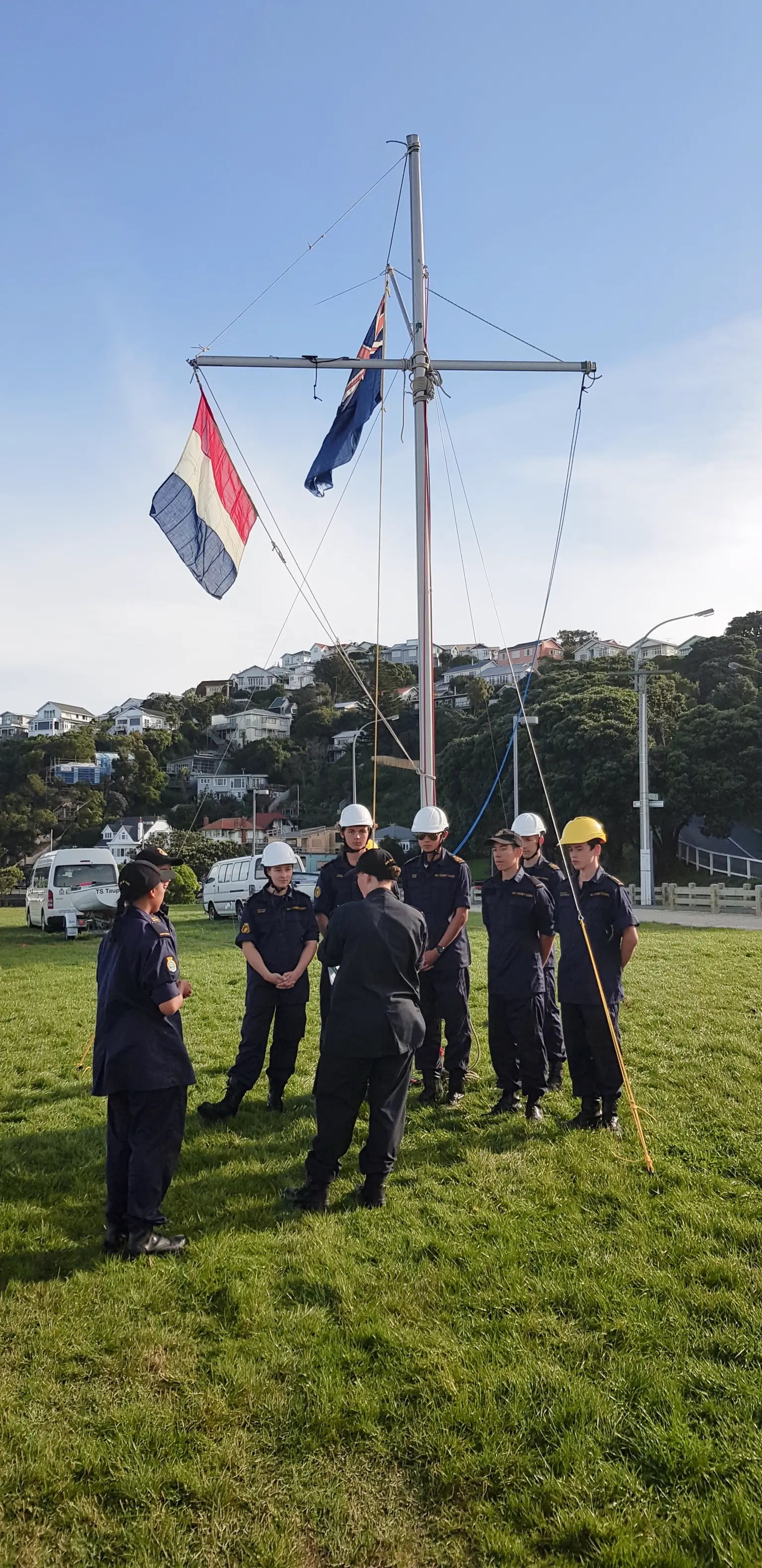
The image captures a group of cadets engaged in maritime training, centered around a mast construction. The cadets are attired in various uniforms, some in dark blue with white caps and others in safety helmets. They seem to be in the midst of a hands-on learning session, with one cadet handling a wooden pole and others standing in a semi-circle receiving instruction. The background features a clear sky and the serene residential backdrop of a hillside community, suggesting the location might be a coastal area. Flags, including what appears to be the New Zealand Ensign, fly from the rigging. The scene is one of teamwork and focus, with the cadets' attention directed towards their instructor, demonstrating the learning and discipline that are integral to cadet training.
Image courtesy of TS ACHILLES (Auckland City).

Seamanship and Maritime Skills

Charting Your Course with Expertise

At the heart of the Hibiscus Coast and Bays Sea Cadets training programme, you’ll find an immersive and comprehensive journey into Seamanship and Maritime Skills. This pivotal area of training is crafted to instil in our cadets a profound understanding and respect for the maritime realm, equipping them with the essential skills for proficient seafaring.

Boat Handling and Seamanship

Gain practical experience in boat handling. Here, cadets learn the nuances of operating different types of watercraft, encompassing skills such as mooring, anchoring, and manoeuvring, across sailing dinghies to larger vessels.
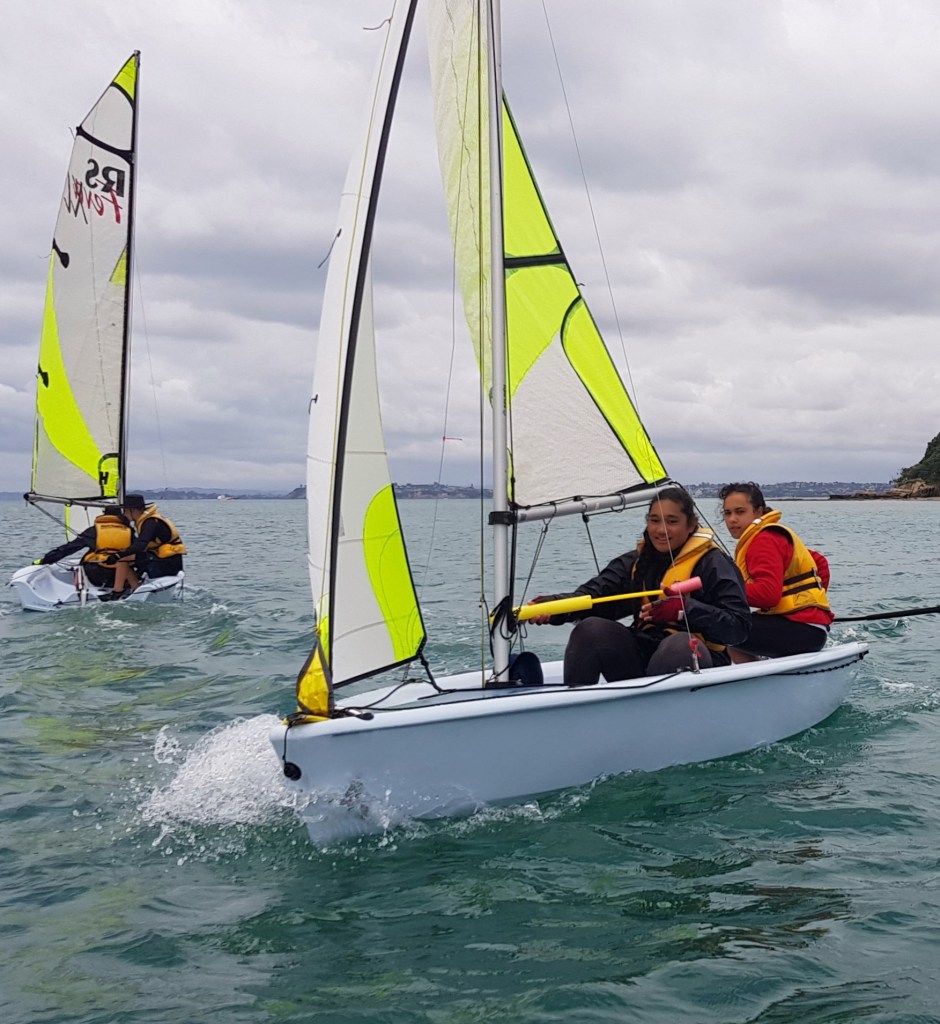
The image captures a vibrant sailing scene with two small sailboats. Each boat is manned by two individuals wearing life jackets, one in yellow, the other in red. They are actively engaged in sailing, with the closest pair looking towards the camera, navigating a boat with a white hull and sails adorned with bright yellow and white patterns. Water sprays up at the bow of their boat, illustrating their swift movement through the water. The background features a calm sea and a coastline dotted with trees and buildings. Overhead, the sky is a mix of blue and grey, suggesting a brisk but pleasant sailing condition.
Image courtesy of TS ACHILLES (Auckland City).
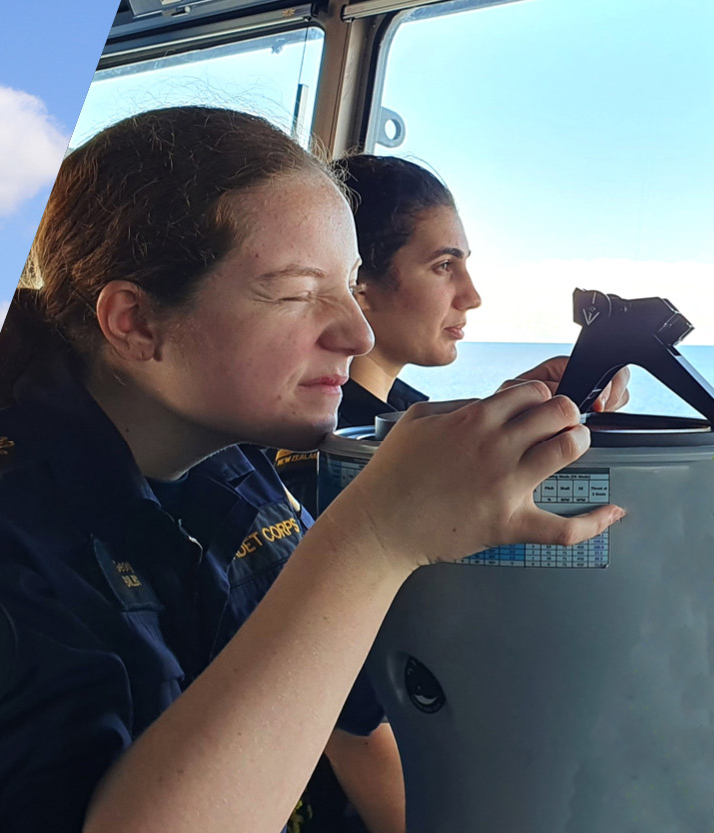
The photo shows two individuals inside a ship's bridge, concentrating on navigation tasks. The person in the foreground, with eyes closed, seems to be visualising or memorising, while the person in the background holds a pair of dividers over a chart, indicative of plotting a course. They are both wearing dark blue uniforms with 'CADET CORPS' embroidered in gold, signifying their roles and affiliation. Natural light from outside the bridge illuminates the scene, suggesting a bright day at sea. The focus and dedication on their faces reflect the seriousness with which they approach their duties in maritime navigation.
Image courtesy of New Zealand Cadet Forces.

Mastering Navigation

Immerse yourself in the art and science of maritime navigation. Our cadets learn to interpret charts, comprehend tidal movements, and utilise navigational instruments, ensuring they can confidently steer a vessel through varied waterways.

Maritime Safety

Safety is paramount at sea. Our cadets undergo rigorous training in maritime safety procedures, encompassing the use of life-saving equipment, emergency response protocols, and first aid, preparing them for any situation.
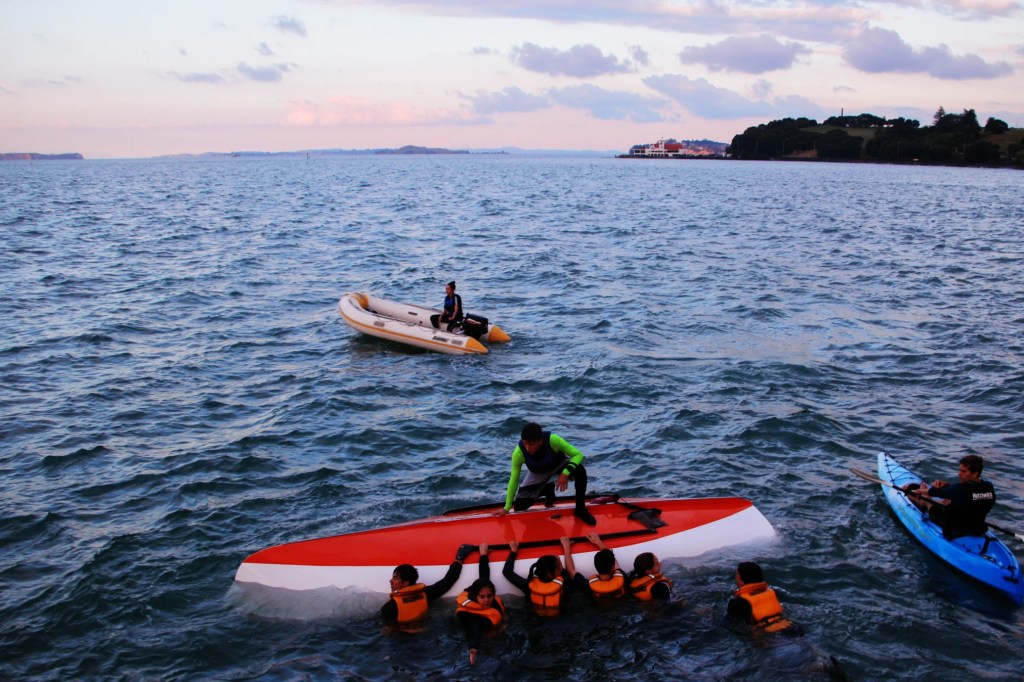
In the image, we see an outdoor water training exercise in progress during twilight. A group of individuals in orange life jackets are in the water around a capsized sailboat, with one person on the hull, actively participating in a capsize recovery drill. To the left, a person on an inflatable dinghy oversees the exercise, while another individual on a kayak is nearby, ready to assist. The water is a deep blue with gentle waves, and the sky above is a mix of soft pink and blue hues, indicative of either dawn or dusk. In the background, there's a hint of land with trees and structures, suggesting this activity is taking place close to shore. The scene is lively with the effort of the training and the calmness of the surrounding nature.
Image courtesy of TS ACHILLES (Auckland City).
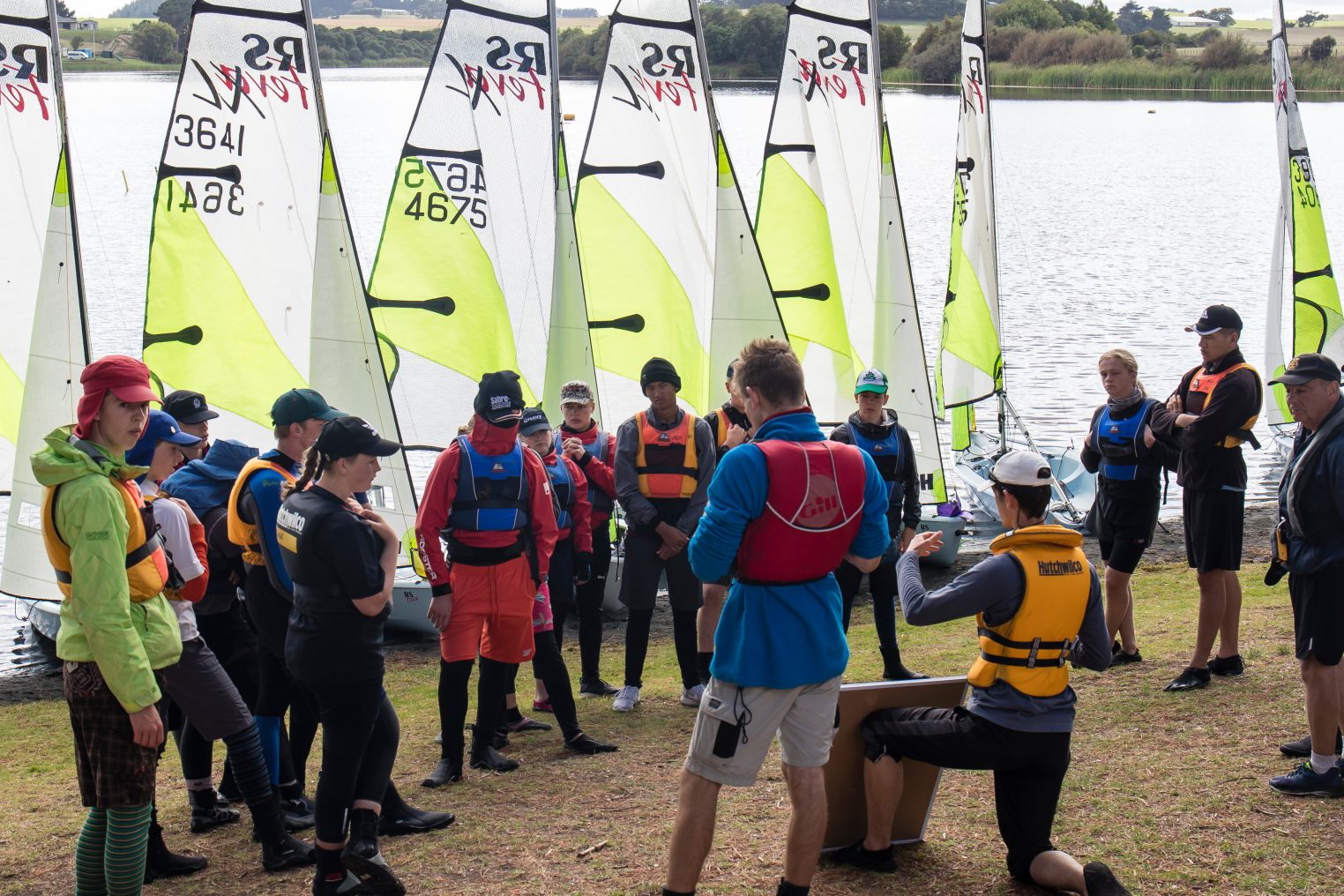
The image depicts a group of individuals at a sailing event, gathered on the grassy shore of a tranquil inland waterway. In the background, several small sailboats with white hulls and vibrant green and black sails are lined up, ready for action. The group in the foreground appears to be listening intently to a speaker, visible in a blue vest, who is addressing the team. The team members, wearing various sailing attire including life jackets in bright oranges and yellows, are attentive, some standing while others are seated or kneeling. The atmosphere suggests a briefing or instructional session before setting sail. The day is overcast, and the calm water reflects the grey sky above.
Image courtesy of New Zealand Cadet Forces.

Practical Application

Regular hands-on sessions enable cadets to apply their classroom knowledge in real-life settings. This practical approach ensures that learning is not only informative but also exhilarating and engaging.

Our cadets develop a comprehensive set of maritime skills, fostering a sense of responsibility and a profound connection with the marine world.

Leadership and Teamwork

Cultivating Future Leaders and Team Players

The Hibiscus Coast and Bays Sea Cadets are committed to developing the leaders of tomorrow through an engaging leadership and teamwork programme. This vital aspect of our training moulds confident, responsible, and collaborative individuals.

Developing Leadership Skills

Our programme focuses on nurturing the innate leadership potential in each cadet. Through various activities, cadets are encouraged to take on leadership roles, learn decision-making skills, and understand the responsibilities of leading a team.
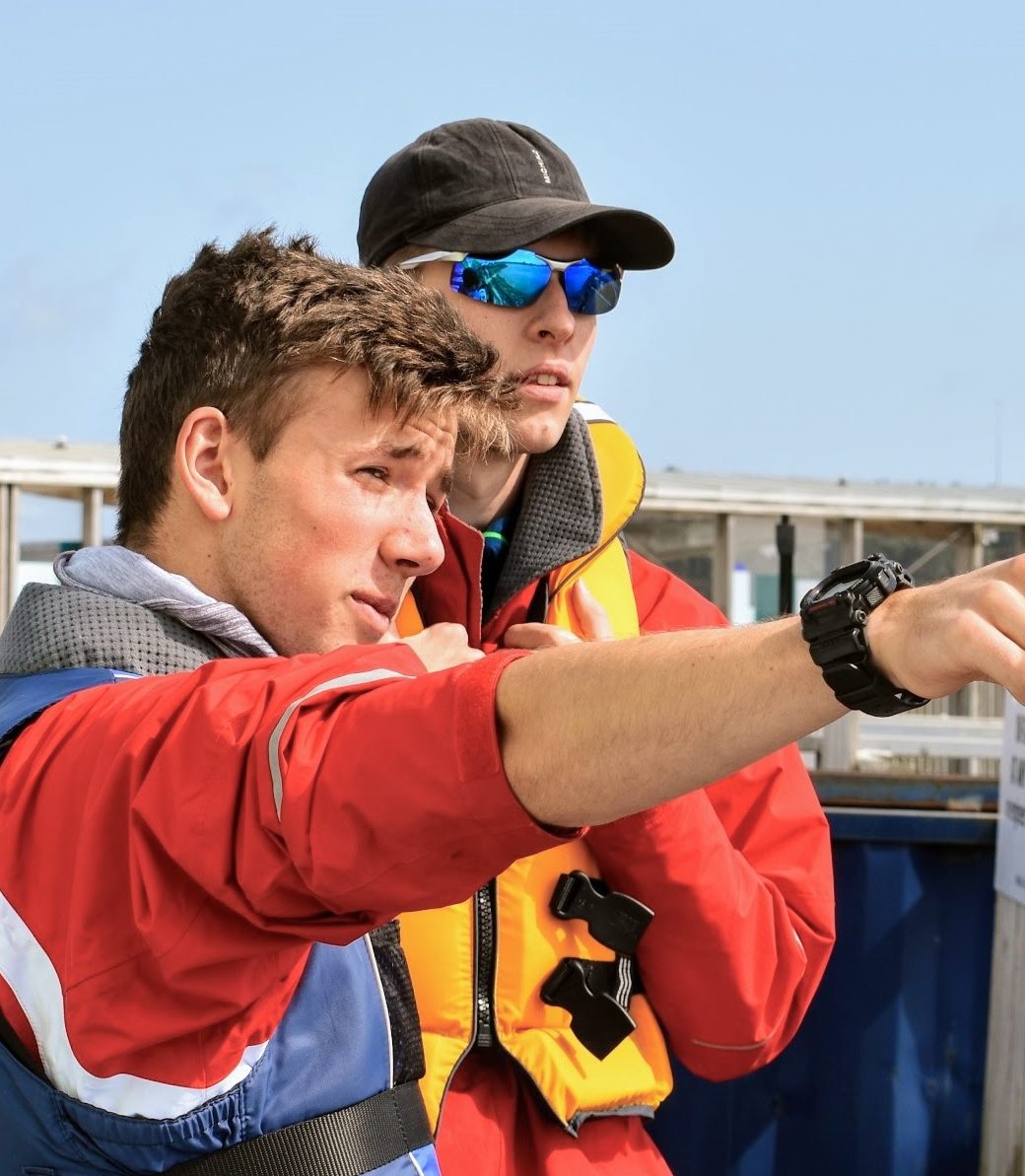
The image captures a close-up moment between two individuals engaged in an outdoor activity. The person in the foreground, wearing a red jacket with grey and white trim and a blue life vest, is gesturing into the distance, their expression intent and instructive. Behind them, a second individual, clad in a black cap and sunglasses that reflect the blue sky, is looking in the same direction with a focused gaze. Both are wearing wristwatches and appear to be involved in a navigation or orientation task. The background is out of focus, with hints of a marine setting, including the edge of a jetty and a sign that suggests proximity to water.
Image courtesy of TS ACHILLES (Auckland City).
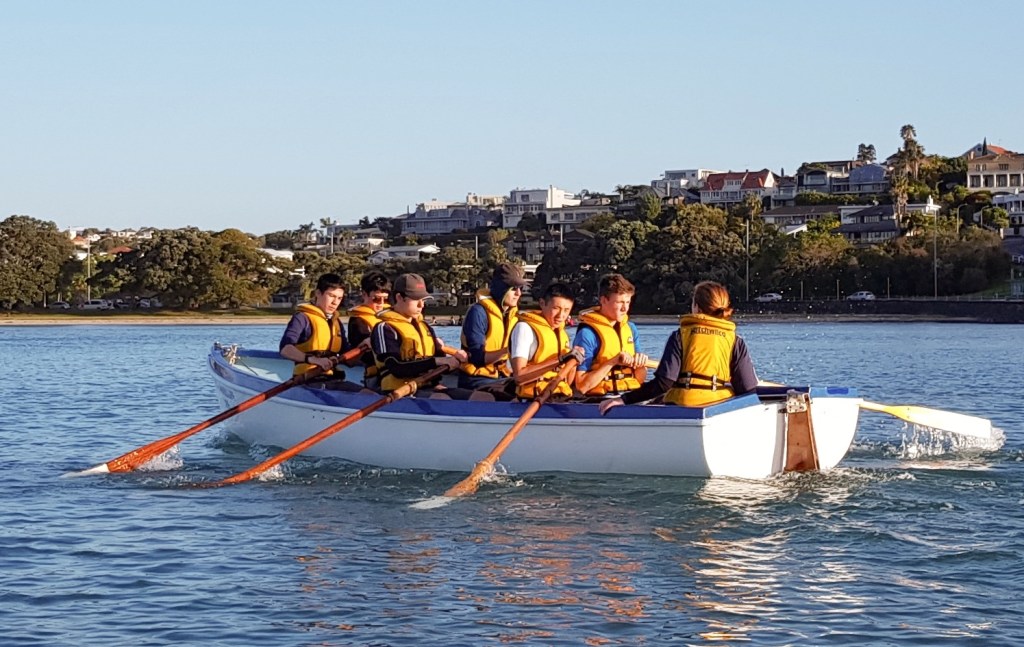
The image features a team of rowers in a large, white boat on a tranquil expanse of water, bathed in the warm glow of the setting sun. Each rower is adorned with a vivid orange life jacket, and they are caught mid-stroke, their oars dipped in the water, creating ripples. The rowers are concentrated and synchronised in their effort. In the background, the shoreline is adorned with a variety of trees and a sprinkling of residential buildings, with the clear blue sky above them. The peaceful evening light lends the scene a serene and amiable atmosphere.
Image courtesy of TS ACHILLES (Auckland City).

Teamwork in Action

We believe that great leaders are also great team players. Cadets participate in team-based exercises, where they learn the value of cooperation, effective communication, and mutual support. These activities are designed to foster a strong sense of camaraderie and collective achievement.

Real-Life Scenarios

Our training includes scenario-based exercises that simulate real-life situations. These scenarios provide cadets with opportunities to apply their leadership and teamwork skills in practical settings, preparing them for real-world challenges.
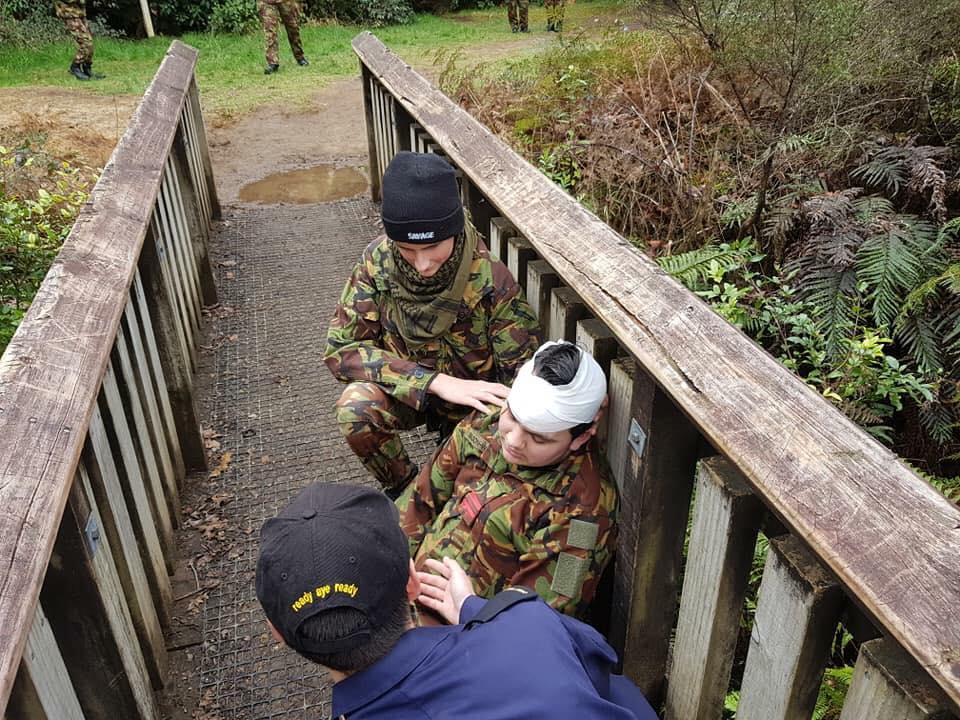
This image is set in an outdoor environment with natural foliage in the background. It captures a first-aid training scenario, where three individuals in camouflage military uniforms are attending to a fourth person seated on a wooden bridge with a handrail. One individual is carefully wrapping a white bandage around the seated person's head, suggesting treatment of a simulated head injury. Another stands by, observing the procedure, while a third looks on from a lower step, providing assistance or guidance. A black beanie with the word "SAVAGE" is visible on the head of the individual applying the bandage. Onlookers in similar military attire can be seen in the background, suggesting this is a group training exercise. The setting appears to be a forested area with walking paths, indicative of a field training environment. The focus and seriousness on the participants' faces underline the importance of the drill, emphasizing the practical skills being taught for emergency medical response in the field.
Image courtesy of TS ACHILLES (Auckland City).
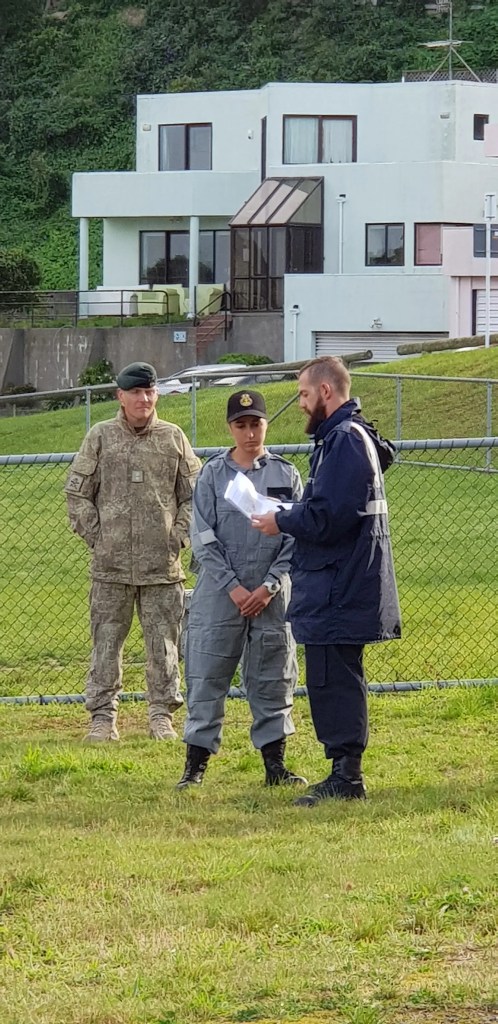
The image shows three individuals in a discussion in what appears to be a field training environment. To the left stands a person in military camouflage attire and a beret, in the centre is someone in a grey jumpsuit with a cap, denoting a naval cadet, and to the right is a person in a dark blue jacket with reflective elements, indicative of a naval instructor. They are engaged in conversation, possibly about the training exercise at hand. In the background, a modern, multi-story residential building can be seen, providing a contrast between the calm domestic setting and the focused, professional exchange taking place in the foreground. The lush green grass and overcast sky suggest an outdoor training scenario during cooler weather.
Image courtesy of TS ACHILLES (Auckland City).

Peer Learning and Mentorship

Older and more experienced cadets often mentor newer members, creating a supportive and inclusive environment. This peer-to-peer learning approach enhances leadership skills and strengthens the bonds between cadets.

Reflection and Growth

Regular feedback and reflective practices are integral to our training. Cadets are encouraged to reflect on their experiences, learn from challenges, and celebrate successes, fostering continuous personal and professional growth.
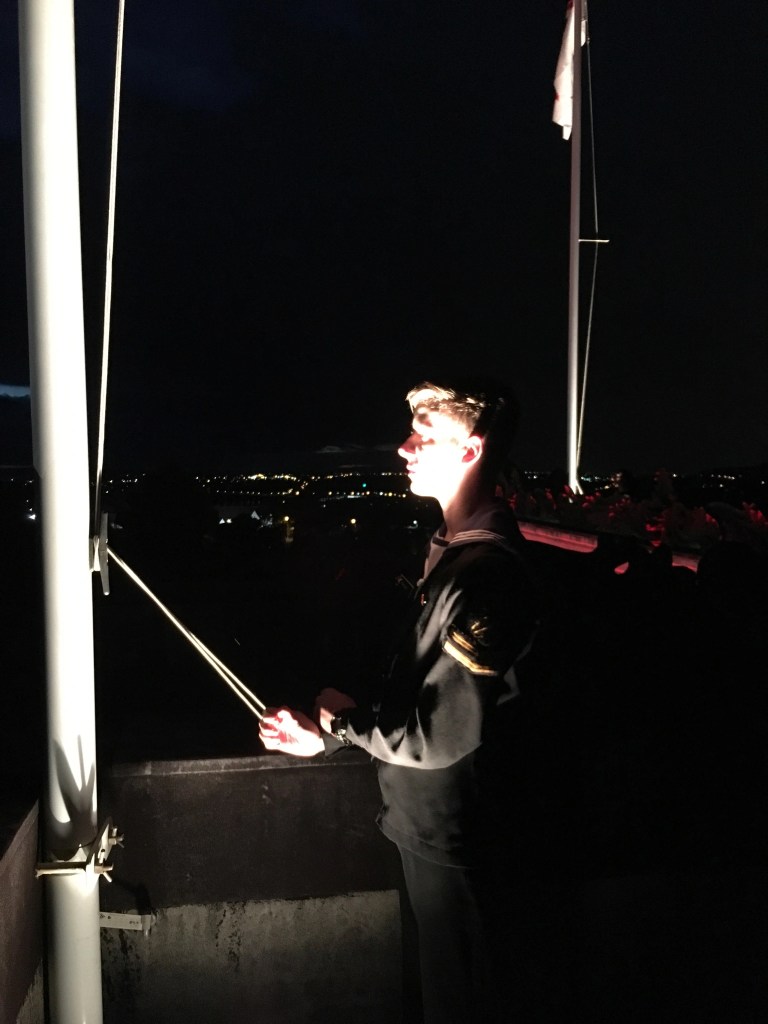
This image portrays a solemn scene at night. A person in a dark navy uniform, with distinct rank insignia on the sleeves, stands in profile, attentively operating a flag hoisting mechanism. Their face is partially illuminated by a nearby light source, highlighting their focused expression. The backdrop is a night sky with a faint glow on the horizon, suggesting either dusk or dawn, and ambient lights from a distant cityscape. A flagpole bearing a flag extends into the dark sky above. The setting and the person's attire suggest a formal military or commemorative event.
Image courtesy of TS ACHILLES (Auckland City).

By participating in our leadership and teamwork programme, cadets not only enhance their ability to lead and work within a team but also develop skills that will benefit them throughout their lives, both within and beyond the Sea Cadets.

Adventure Training

Embracing Challenge and Adventure

At the Hibiscus Coast and Bays Sea Cadets, our training programme places a significant emphasis on physical fitness and adventure training. This aspect of our curriculum is designed to build resilience, foster a spirit of adventure, and instil a lifelong appreciation for physical well-being and the great outdoors.

Adventure Activities

Adventure is at the heart of our training. Cadets participate in a range of outdoor activities, such as sailing, hiking, and camping. These experiences not only test their physical abilities but also provide an opportunity to connect with nature and learn valuable survival skills.
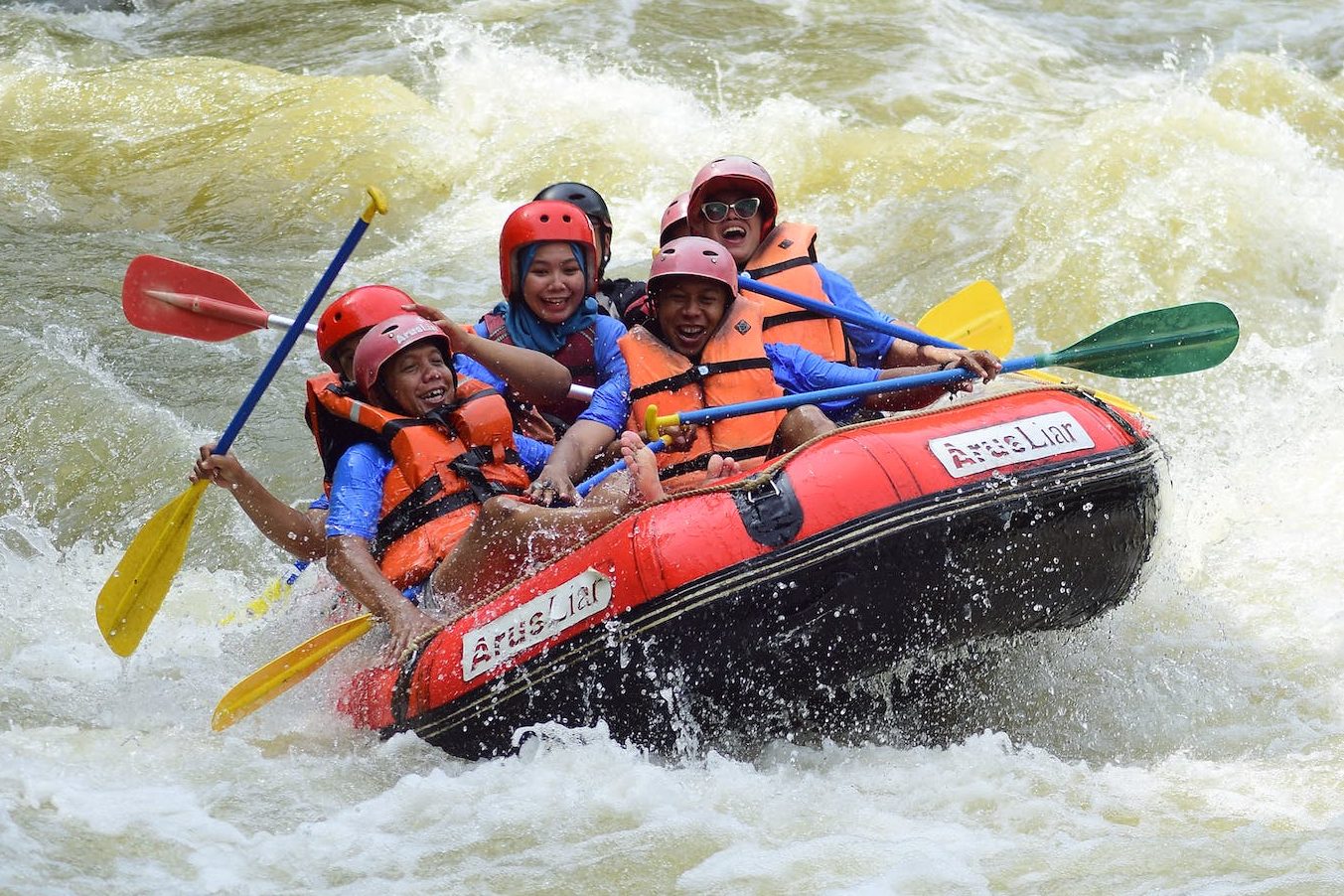
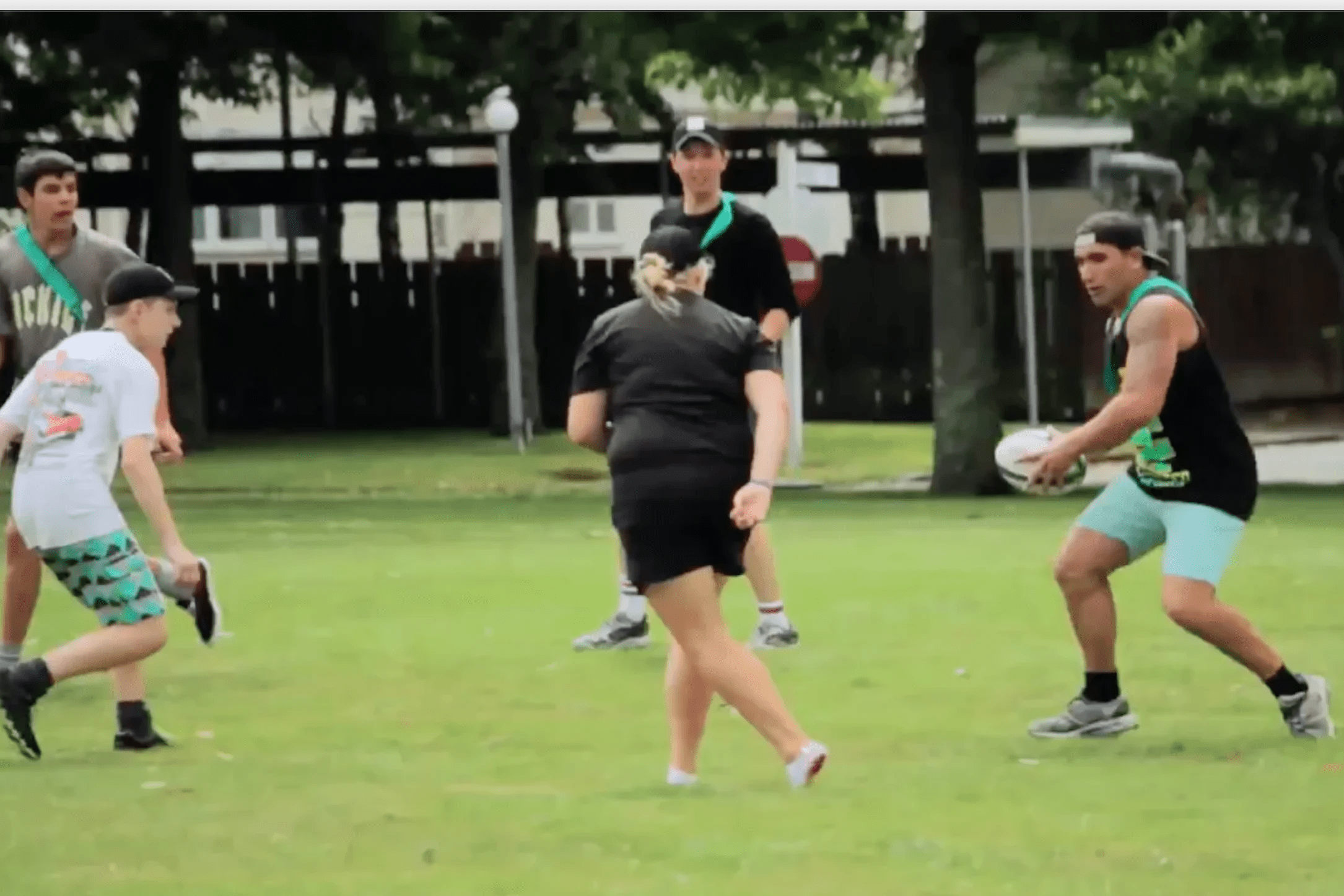
Image courtesy of New Zealand Cadet Forces.

Physical Training

Our physical training sessions are tailored to enhance the overall fitness levels of each cadet. These sessions include a variety of exercises and routines focused on building strength, stamina, and agility.

Team Sports and Challenges

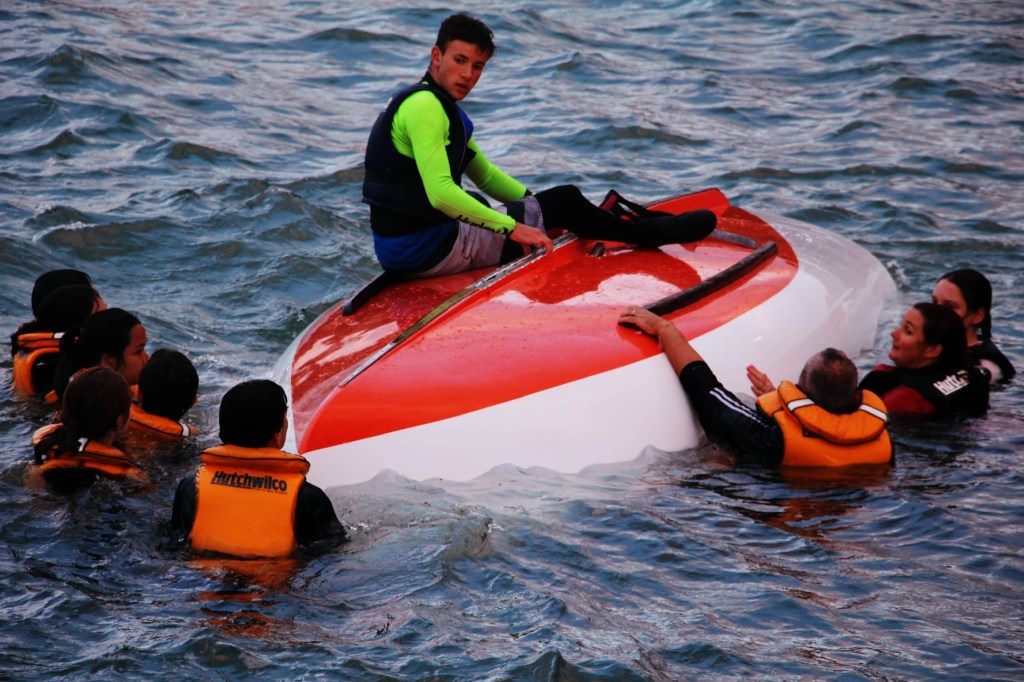
Team sports are a regular feature of our training programme. They not only contribute to physical fitness but also promote teamwork and healthy competition. Challenges and obstacle courses are also incorporated to push the cadets’ limits and enhance their problem-solving skills.
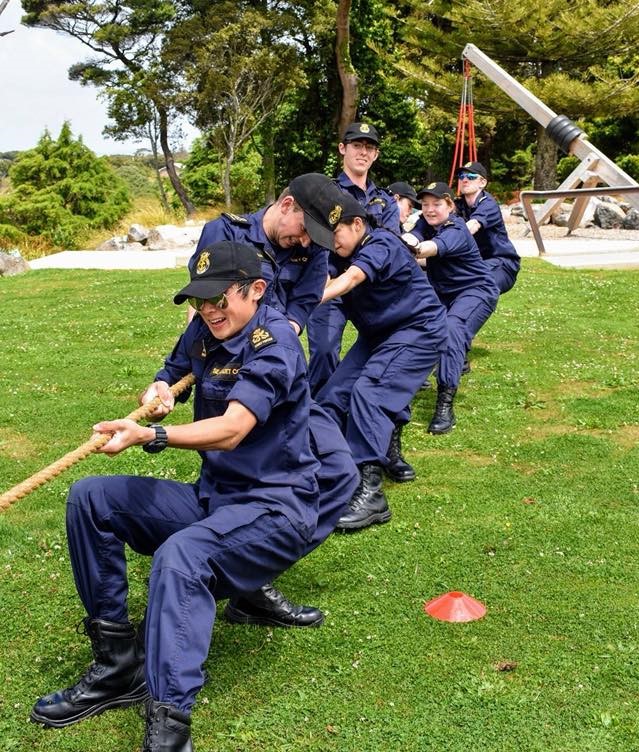
This image captures a moment of high spirits and teamwork during an outdoor tug-of-war contest. A group of people in dark navy uniforms, identified by patches as members of a cadet corps, are in the midst of a pull. They are leaning back, digging their heels into the grass to gain traction. The focus is on the front person who is grinning, holding the rope tightly, and seems to be leading the effort. They are wearing utility caps, and one of them is wearing glasses. The scene is set on a grassy field with a cannon and trees in the background, suggesting a park or recreational area. The weather appears pleasant, with a mix of sun and clouds.
Image courtesy of TS ACHILLES (Auckland City).
In the image, we see a close-up of a capsize recovery training session. Several individuals in orange life jackets are closely huddled around a capsized red and white sailboat, working collaboratively to right it. One person, wearing a bright lime green jacket and blue life vest, is on top of the overturned hull, coordinating the group's efforts. The sea around them is choppy with visible waves, indicating some wind activity, which is common in such training exercises. The focus and determination on the participants' faces reflect the importance of the drill in building teamwork and safety skills in a maritime setting.
Image courtesy of TS ACHILLES (Auckland City).

Safety and Well-being

The safety and well-being of our cadets are paramount. All physical and adventure activities are conducted under expert supervision, with a strong focus on safety protocols and risk management.

Personal Development

Through these physically demanding and adventurous experiences, cadets develop resilience, learn to overcome obstacles, and gain a sense of accomplishment. These activities are instrumental in building confidence and self-esteem.
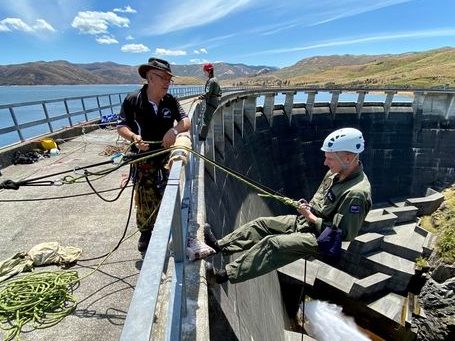
This photo depicts a sunny day with a clear blue sky and a body of water in the background, possibly a reservoir or dam. Two individuals in protective gear are engaged in an abseiling activity. The person on the left stands on a concrete ledge, wearing a dark navy uniform with cap, and is handling the rope and belaying devices, ensuring the safety of the abseiler. The second person, dressed in olive green military fatigues and a white helmet, is in a seated position against a steep concrete dam wall, secured with ropes, ready to descend. A coiled green rope lies on the ground, indicating preparations for a controlled descent. The scene is indicative of a training exercise, focusing on skill development in rappelling and the use of safety equipment in a high-angle environment. The open setting and specialized equipment suggest a rigorous and professional approach to the activity, emphasizing safety and technique in an outdoor adventure or rescue training scenario.
Image courtesy of New Zealand Cadet Forces.

Our physical fitness and adventure training programme is more than just exercise; it’s about embracing challenges, enjoying the thrill of adventure, and discovering one’s true potential. For cadets at the Hibiscus Coast and Bays Sea Cadets, every physical endeavour is a step towards growth and self-discovery.

Military Drill and Discipline

The Foundation of Respect and Precision

The Military Drill and Discipline component of our training at the Hibiscus Coast and Bays Sea Cadets plays a crucial role in instilling a sense of respect, precision, and pride in our cadets. This fundamental aspect of our programme is about much more than learning routines; it’s about developing character and fostering a sense of belonging.

Learning the Drill

Cadets are taught various military drills that involve precise movements and commands. These drills enhance coordination, attention to detail, and the ability to follow instructions meticulously.
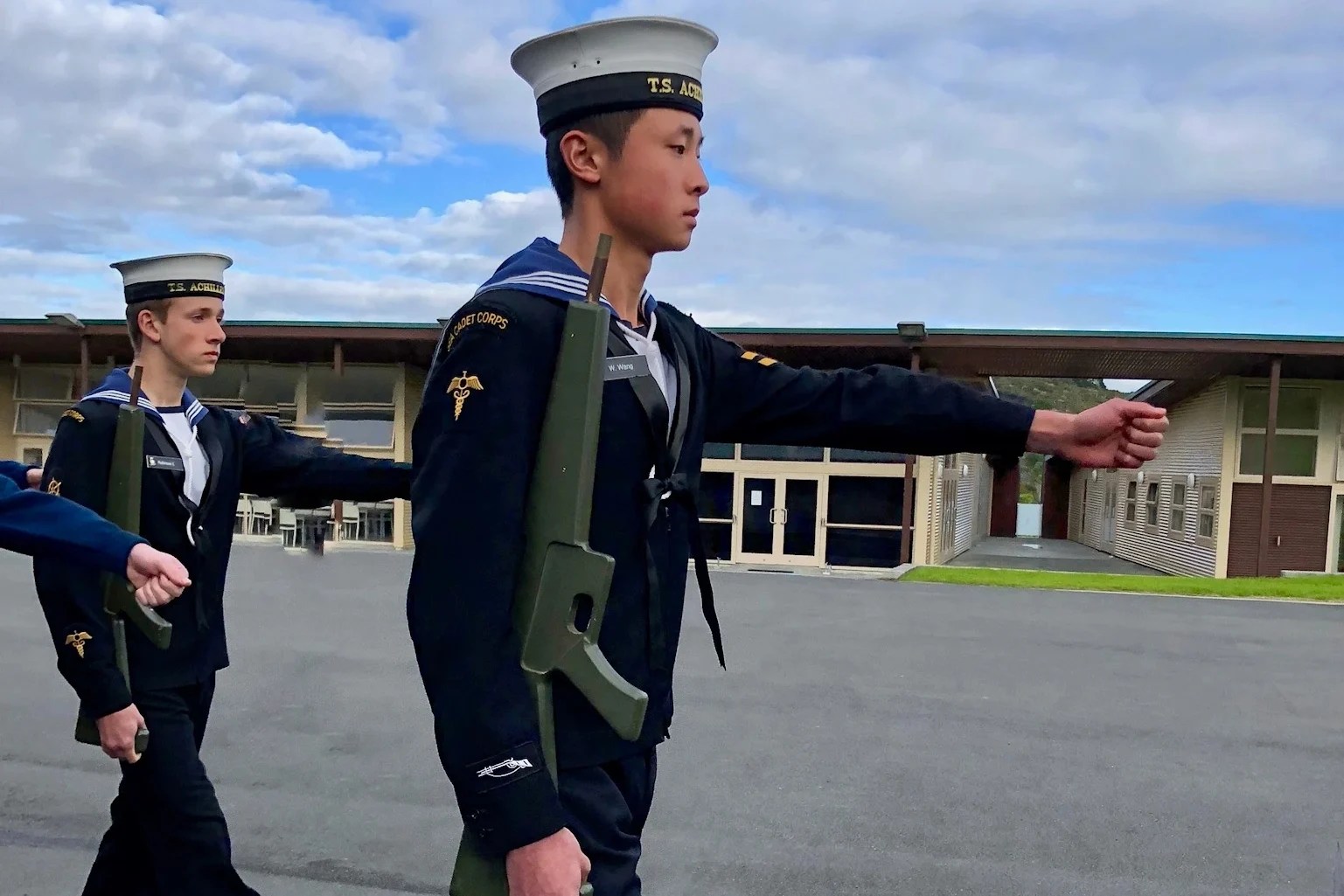
The image depicts two cadets in uniform, marching in unison on what appears to be a parade ground. The foreground is dominated by a young cadet captured mid-stride, his left arm extended in a precise, outward motion, indicative of a drill movement. He wears a dark naval cadet uniform with a white peaked cap that bears the inscription "T.S. Achilles", signifying affiliation with a particular unit or training ship. His expression is one of focused determination, with eyes fixed ahead, embodying the discipline and precision of military drill. Behind him, another cadet follows suit, mirroring the actions of the leader. The backdrop features an overcast sky and a nondescript building, placing the emphasis on the cadets and their activity.
Image courtesy of TS ACHILLES (Auckland City).
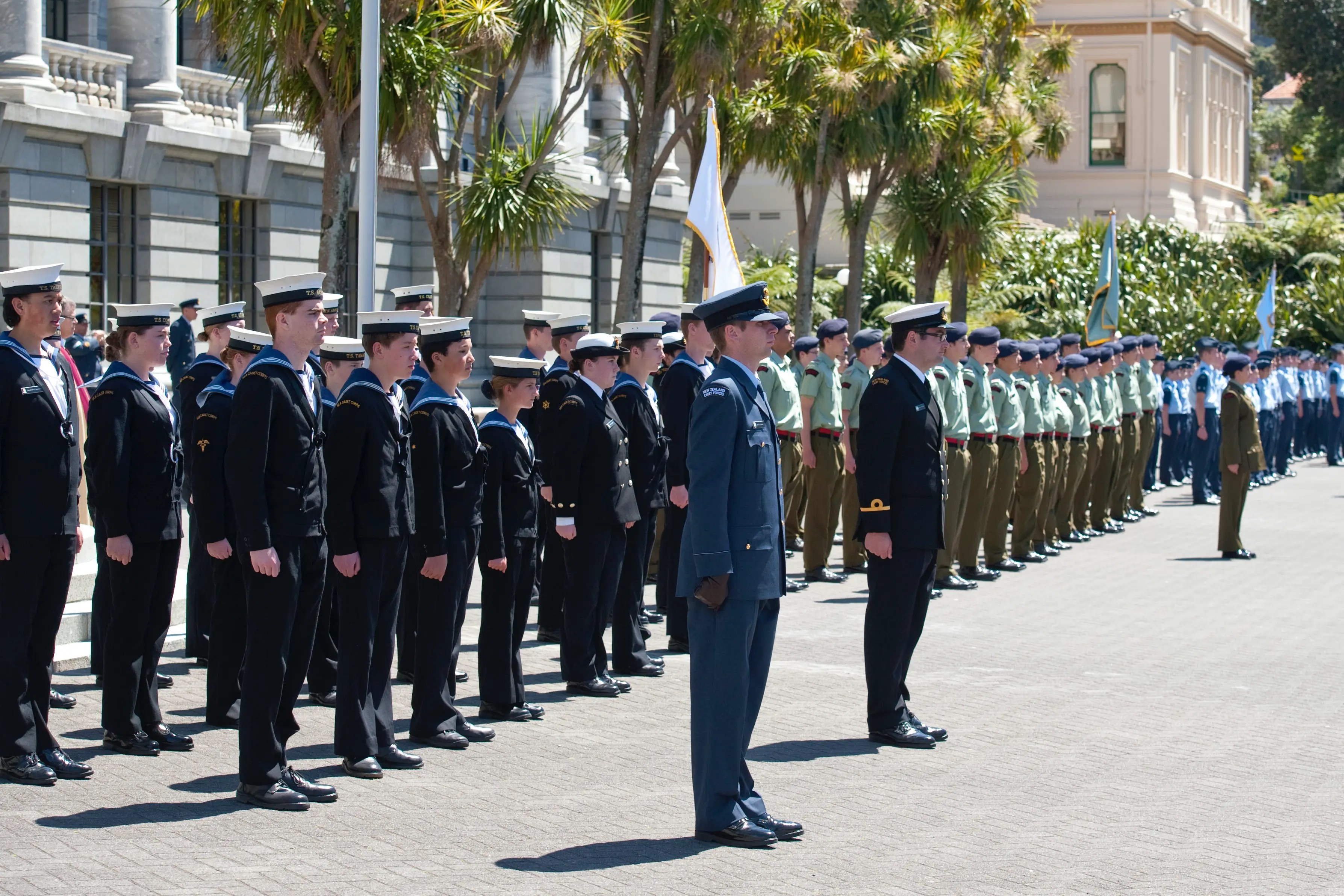
The image captures a formal military parade under clear blue skies. It features uniformed personnel from various branches lined up in formation. The first two rows are dressed in navy blue uniforms with white peaked caps, likely representing naval forces. Following them are individuals in light blue uniforms with darker caps, indicative of air force personnel. The subsequent rows are filled with individuals in olive green uniforms, typical of army attire. Each member stands erect and attentive. Behind them, the architecture suggests a formal, possibly governmental, setting with palm trees dotting the landscape, adding a serene tropical feel to the disciplined scene. The atmosphere is one of solemnity and pride, reflective of the importance and dignity of the occasion.
Image courtesy of New Zealand Cadet Forces.

Instilling Discipline

The discipline learnt through military drills goes beyond the training ground. It instils in cadets a sense of order and structure that benefits them in all aspects of life, encouraging punctuality, respect, and self-discipline.

Ceremonial Events

Cadets have the opportunity to participate in ceremonial events, where they can showcase their drill skills. These events are a source of great pride and a chance to demonstrate the discipline and precision they have mastered.
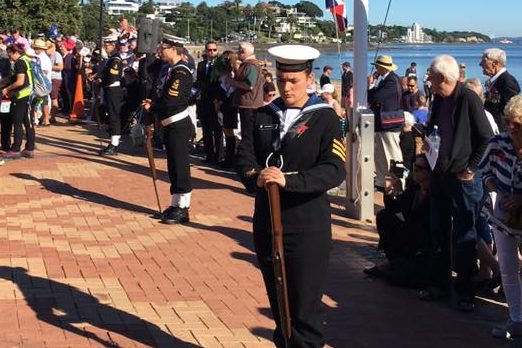
This image shows a sunny day at a commemorative event, most likely ANZAC Day, at what appears to be a waterfront location. In the foreground, a person in naval uniform stands at attention, holding a ceremonial rifle vertically in front of them with both hands. They are wearing a white peaked cap, a navy jacket with medals affixed, white gloves, and dark trousers with a stripe down the side. Behind them, two flags are at half-mast on a flagpole, the New Zealand flag and another flag with Union Jack at the corner and a Southern Cross, indicating an Australian connection. A crowd of onlookers, some of whom are wearing poppies, watches the ceremony with respect and attention. The location, suggested by the presence of water and boats in the background, could be a seaside memorial in New Zealand. The atmosphere is solemn and respectful, befitting a day of remembrance.
Image courtesy of TS ACHILLES (Auckland City).
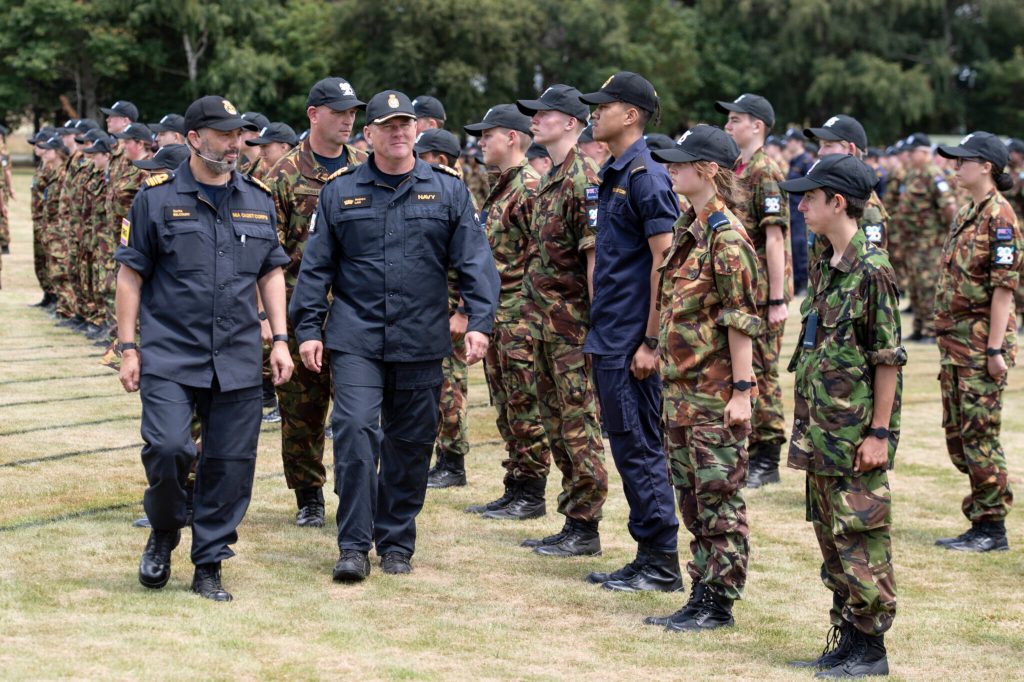
The image shows a group of military personnel in various uniforms assembled outdoors. In the foreground, there are individuals in dark naval service uniforms with distinctive cap badges, standing out against a larger formation dressed in camouflage combat uniforms. The formation appears to be arranged in neat rows, indicative of a military parade or inspection. The environment suggests an open field or parade ground, with trees and overcast skies in the background. The focus and discipline of the group are evident as they stand at attention. This scene typically represents an organized military event, possibly involving different branches of the armed forces, and reflects the formality and structure of such occasions.
Image courtesy of TS ACHILLES (Auckland City).

Team Cohesion

Performing drills as a unit fosters a strong sense of team cohesion and mutual respect among cadets. It’s a powerful way to experience the unity and strength of working closely together towards a common goal.

Building Confidence

Mastery of military drills gives cadets a sense of achievement and confidence. It’s a tangible demonstration of their ability to learn, adapt, and excel in challenging environments.
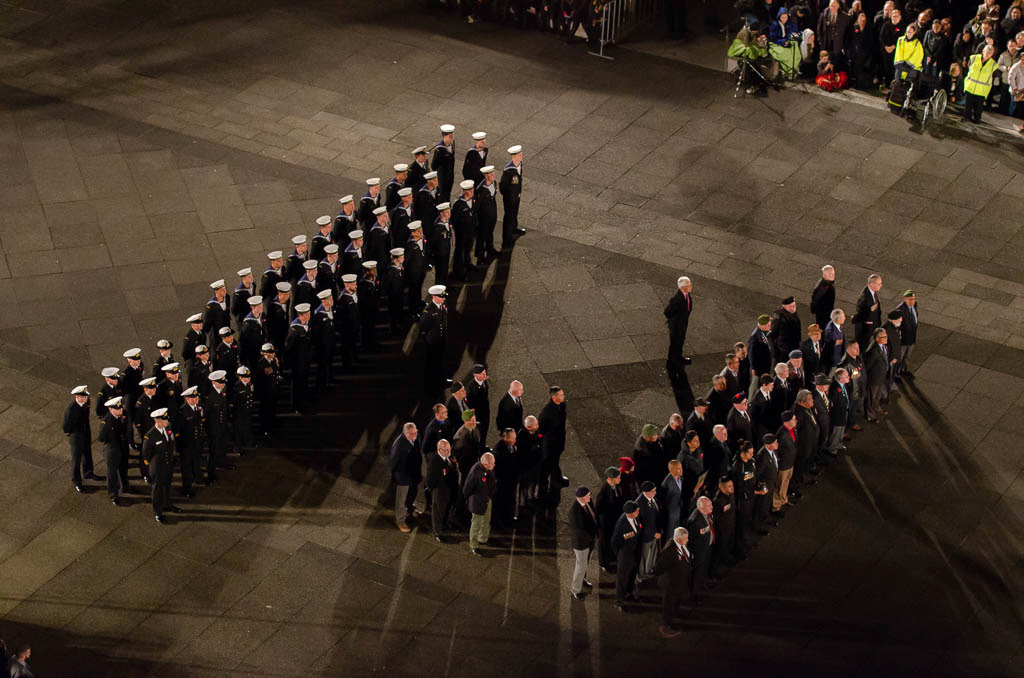
The image captures a ceremonial gathering at dawn, illuminated by ambient light. A formation of uniformed navy personnel, is arranged in a block pattern on a paved area. They are wearing white peaked caps, and their dark uniforms contrast with the light-colored ground. To the right, a group of veterans, some wearing medals and traditional red poppy pins, stands in rows. Observers are visible in the background, behind barriers, indicating this is a public event. The occasion appears to be somber and respectful, characteristic of a commemorative service such as Anzac Day, where military and civilians come together to remember and honour those who have served.
Image courtesy of TS ACHILLES (Auckland City).

The Military Drill and Discipline training at the Hibiscus Coast and Bays Sea Cadets is about cultivating a respectful and disciplined mindset that prepares our cadets for leadership roles and life challenges. It’s an essential part of our journey towards developing well-rounded individuals.

Specialised Programmes and Opportunities

Expanding Horizons Beyond the Basics

The Hibiscus Coast and Bays Sea Cadets proudly offer a range of specialised programmes and unique opportunities that go beyond standard training. These programmes are designed to provide cadets with advanced skills, expose them to a broader scope of maritime knowledge, and offer experiences that can be both challenging and rewarding.
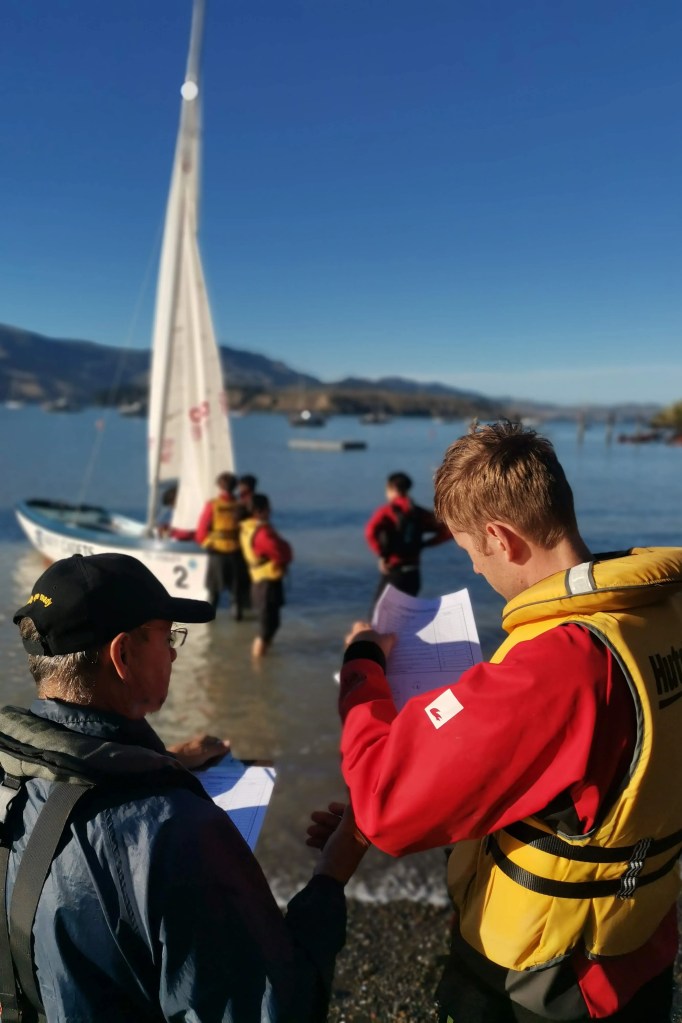
The image captures a serene, sunny day at a lakeside with clear blue skies. In the foreground, two individuals are engaged in a discussion. One, wearing a dark cap and a navy jacket with a backpack, is holding papers and discussing their content with the other person, who is wearing a bright red life jacket with yellow elements, suggesting they are a participant in a water-based activity, possibly sailing. The focus is on these two individuals, with the background slightly blurred. Behind them, several people, potentially other crew members or participants, are in the shallow waters near the shore, with a white sailboat visible, numbered '2'. The calm waters of the lake gently lap at the shore, and other boats can be seen in the distance, along with a mountain range that creates a majestic backdrop. The interaction between the two individuals in the foreground suggests a briefing or a review of the sailing activity, possibly discussing safety or instructions. The attire of the person in the life jacket indicates they are ready for an aquatic activity. The overall atmosphere is one of preparation and anticipation for sailing on this picturesque day.
Image courtesy of New Zealand Cadet Forces.

Complete our specialised training, encompassing Advanced Courses and Maritime Workshops, where precision, expertise, and a passion for the sea converge, offering a rich platform for acquiring and refining essential naval skills.
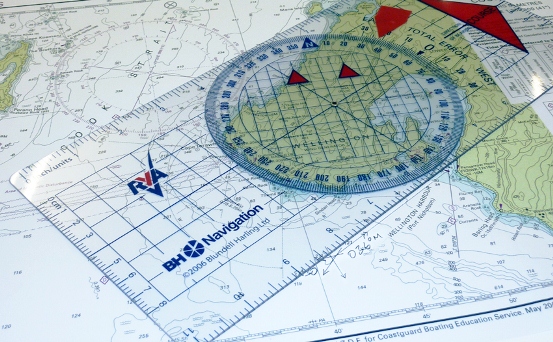
The image displays a navigational chart used for maritime purposes. The chart contains various topographical details and depth measurements critical for safe sea navigation. Placed atop the chart is a circular protractor, also known as a course plotter, which is transparent with a blue grid and measurements in degrees along its circumference. It is used for charting courses and bearings in navigation. Two red triangles, presumably course markers, are placed on the protractor, indicating specific angles or directions. The chart and the protractor together are tools used in boating education to teach the principles of maritime navigation. The logo on the plotter reads "BH Navigation". This equipment is essential for those learning to navigate water vessels accurately and safely.
Image courtesy of Coastguard Boating Education.

Advanced Navigation Courses

For cadets keen on mastering the art of navigation, our advanced courses delve deeper into the complexities of maritime navigation. These include learning about state-of-the-art navigational technology, advanced chart work, and celestial navigation techniques.
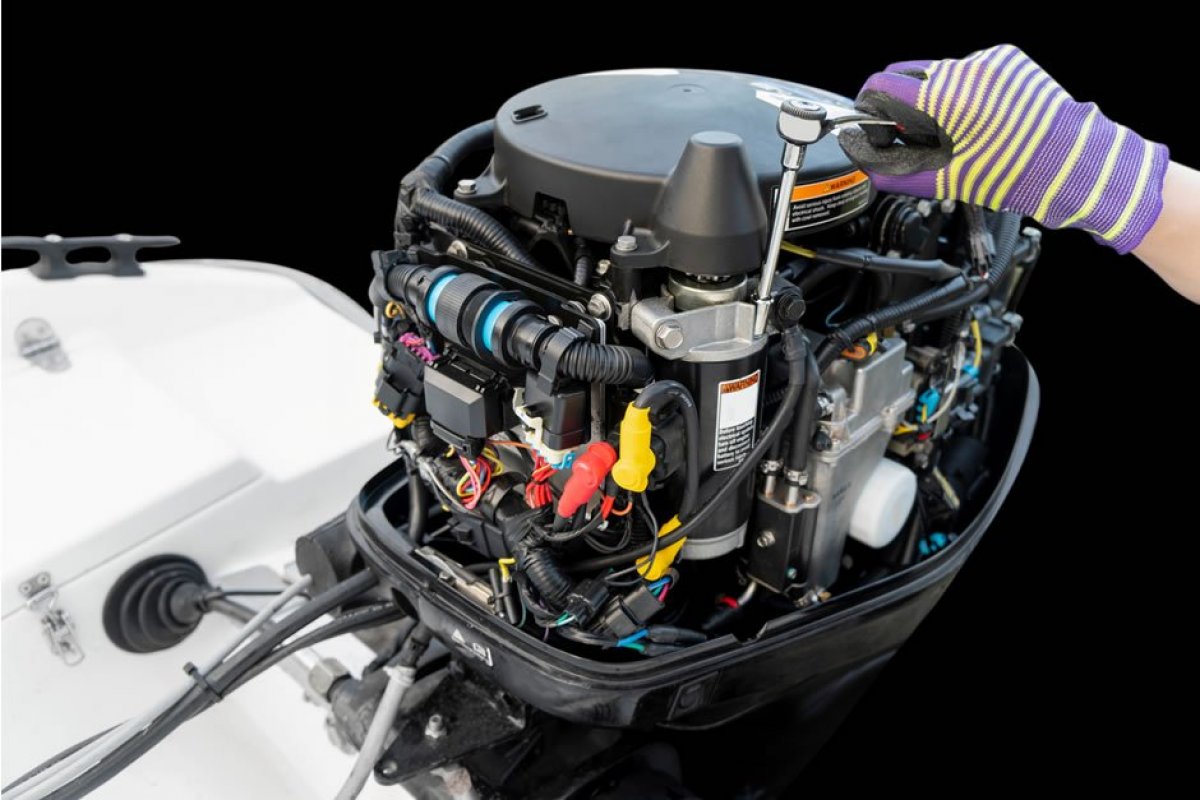
This image features a close-up of a modern outboard boat engine, with someone's hand in the foreground wearing a striped purple and grey glove, working on the engine. The engine is detailed and complex, with various components such as electrical wiring in multiple colors, black ribbed hoses, metallic cylinders, and parts with labels and warning stickers visible. The engine cover is a dark grey color and the engine itself contains parts in black, silver, and with color-coded elements like red and yellow caps, suggesting different functions or fluid types. The engine is mounted on the back of a white boat, and the background is a blurred black void, focusing the viewer's attention on the engine and the maintenance work being performed. The overall image portrays a maintenance or inspection process, indicative of regular upkeep and attention to the intricate systems that enable the motor's operation. The clarity and depth of the components suggest a well-maintained piece of equipment, essential for the reliability and safety of marine transport.

Specialised Maritime Workshops

We offer workshops focusing on specific maritime skills such as advanced boat handling, marine engineering basics, and environmental conservation efforts at sea. These workshops are led by experts in the field and provide hands-on, practical learning experiences.

In the foreground of the image stands a man in a dark blue navy-style uniform with the name "Glen STOKES" on his right chest. He is smiling at the camera, arms crossed, wearing a watch on his left wrist. Behind him, in focus, are multiple rows of people in various uniforms, primarily dark blue and military camouflage, standing at attention in an open field. The uniforms suggest a disciplined, uniformed group, possibly a military or cadet gathering. The setting is sunny with a clear blue sky and a few white clouds. In the background, a large sign with the number "150" suggests a significant anniversary or milestone event. The personnel appear to be of various ages and ranks, indicative of a diverse organization. The scene conveys a sense of pride and formal display.
Image courtesy of New Zealand Defence Force.

Leadership Development Programmes

Recognising the importance of leadership skills, we provide programmes specifically aimed at developing future leaders. These include leadership theory, practical leadership exercises, and mentorship opportunities.
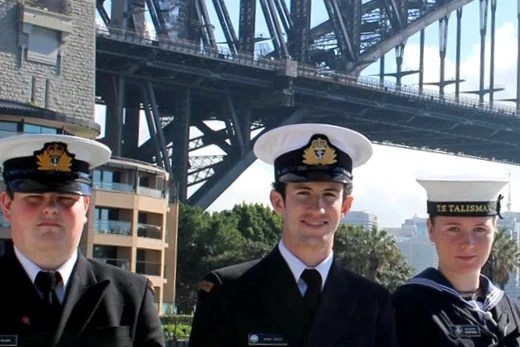
The image features three individuals in naval uniforms, with the iconic Sydney Harbour Bridge in the background, suggesting the location is Sydney, Australia. The two outer individuals are wearing peaked caps with the badge of the New Zealand Cadet Forces, while the person in the middle has a cap tally with "TS TALISMAN" inscribed, indicating they are part of a sea cadet corps, likely from New Zealand given the badge design. All three are wearing dark navy double-breasted jackets with brass buttons, white peaked caps, and black neckties. The central figure stands out with additional decorations: two thin gold stripes on their sleeves indicating a higher rank, possibly that of a junior officer. Their posture is attentive and formal, reflecting the disciplined nature of cadet or naval service. The image captures a moment of pride or ceremonial significance, possibly during an international cadet exchange or a public event. The setting is bright and clear, and the presence of such a well-known landmark provides a strong sense of place and occasion.
Image courtesy of New Zealand Cadet Forces.

Overseas Exchanges

An incredible opportunity exists for cadets aged 16–18 years through the International Sea Cadet Exchange Program (ISCEP). With annual exchanges with countries such as the USA, Australia, and others, cadets can experience different cultures and naval practices. This programme is not just a cultural and educational adventure, but also an opportunity to build global friendships and networks.
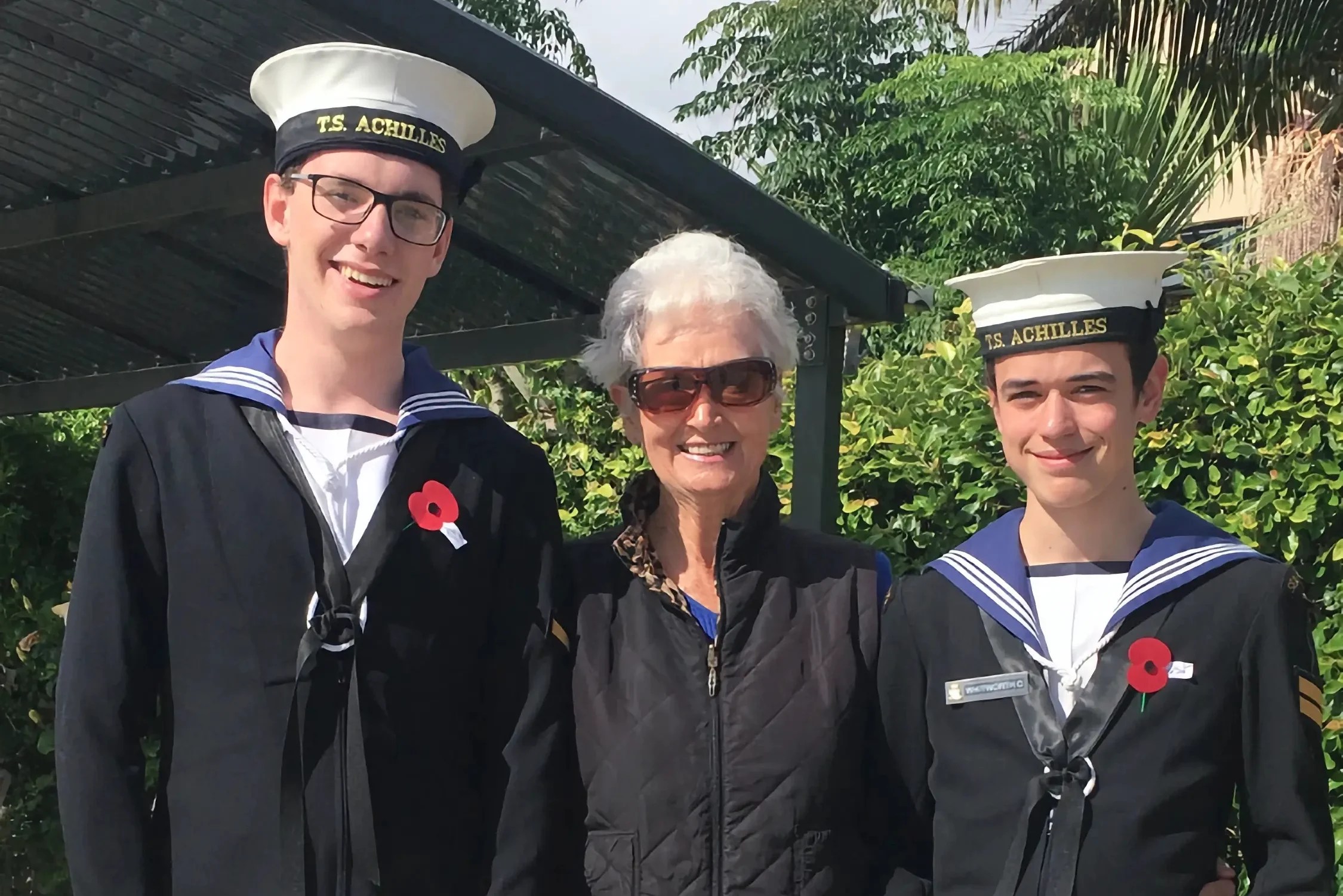
The image features two cadets and an older woman standing outside on a sunny day. The cadets are dressed in naval cadet uniforms, with white hats labeled "T.S. Achilles" and dark jackets with white belts. Both have red poppies pinned on their jackets, indicating the photo was likely taken around Anzac Day or Remembrance Day. The cadet on the left holds a collection box labeled "RSA," which stands for the Returned and Services' Association, an organization supporting military veterans in New Zealand. The cadet on the right holds a donation bucket. The woman in the center, likely a supporter or perhaps a veteran herself, wears a black puffer vest, black trousers, and sunglasses, with a poppy on her vest. They are all smiling, suggesting a positive atmosphere during a commemorative event. The setting includes a covered walkway and a backdrop of trees and a residential area. The image captures a moment of intergenerational connection and the continuation of traditions honoring military service.
Image courtesy of TS ACHILLES (Auckland City).

Community Engagement

Emphasising our commitment to community service, cadets are encouraged to engage in community projects and volunteering opportunities. These experiences instil a sense of social responsibility and offer a chance to make a positive impact in the community.
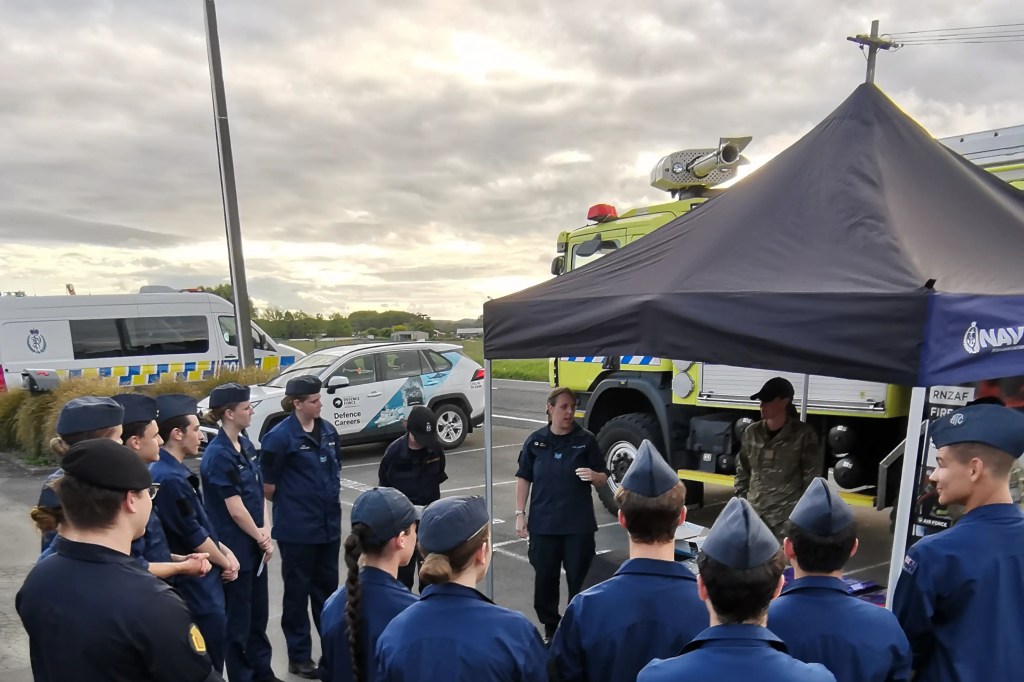
The image depicts an outdoor briefing or educational session, likely related to defense careers or emergency services. A group of individuals in navy blue uniforms with distinctive caps are attentively listening to a speaker, also in a navy uniform, who is addressing the group. The uniforms have badges that suggest they may be part of a naval cadet program or similar organization. In the background, there is a large emergency vehicle, possibly a fire truck, with the text "RNZAF FIRE" visible, indicating it belongs to the Royal New Zealand Air Force. A pop-up canopy with "NAVY" branding is also set up, under which some equipment and personnel can be seen. A police vehicle with blue and yellow checks, as well as a branded car promoting defense careers, are parked nearby, suggesting this may be a joint forces community event or a public showcase of military and emergency services. The setting appears to be in the late afternoon, as indicated by the soft lighting and the presence of shadows. The sky is overcast, with patches of blue and clouds, creating a moody atmosphere. The participants are focused and engaged, indicating the importance of the information being shared. The overall impression is one of community engagement and education about defense force careers.
Image courtesy of No. 5 (Rodney District) Squadron.

Career Exploration and Guidance

For cadets considering a future in maritime careers or the defence forces, we offer career exploration sessions and guidance. These sessions provide insights into various maritime and defence-related careers and the pathways to achieving them.

Our specialised programmes and opportunities are designed to provide our cadets with an enriched experience that extends well beyond the traditional training framework. These programmes open doors to new possibilities, encouraging cadets to explore, excel, and engage with the world around them.

Qualifications and Achievements

Building Skills for Life and Leadership

The Hibiscus Coast and Bays Sea Cadets offer an array of qualifications and achievements that prepare our cadets for future careers and education, instilling skills that last a lifetime.
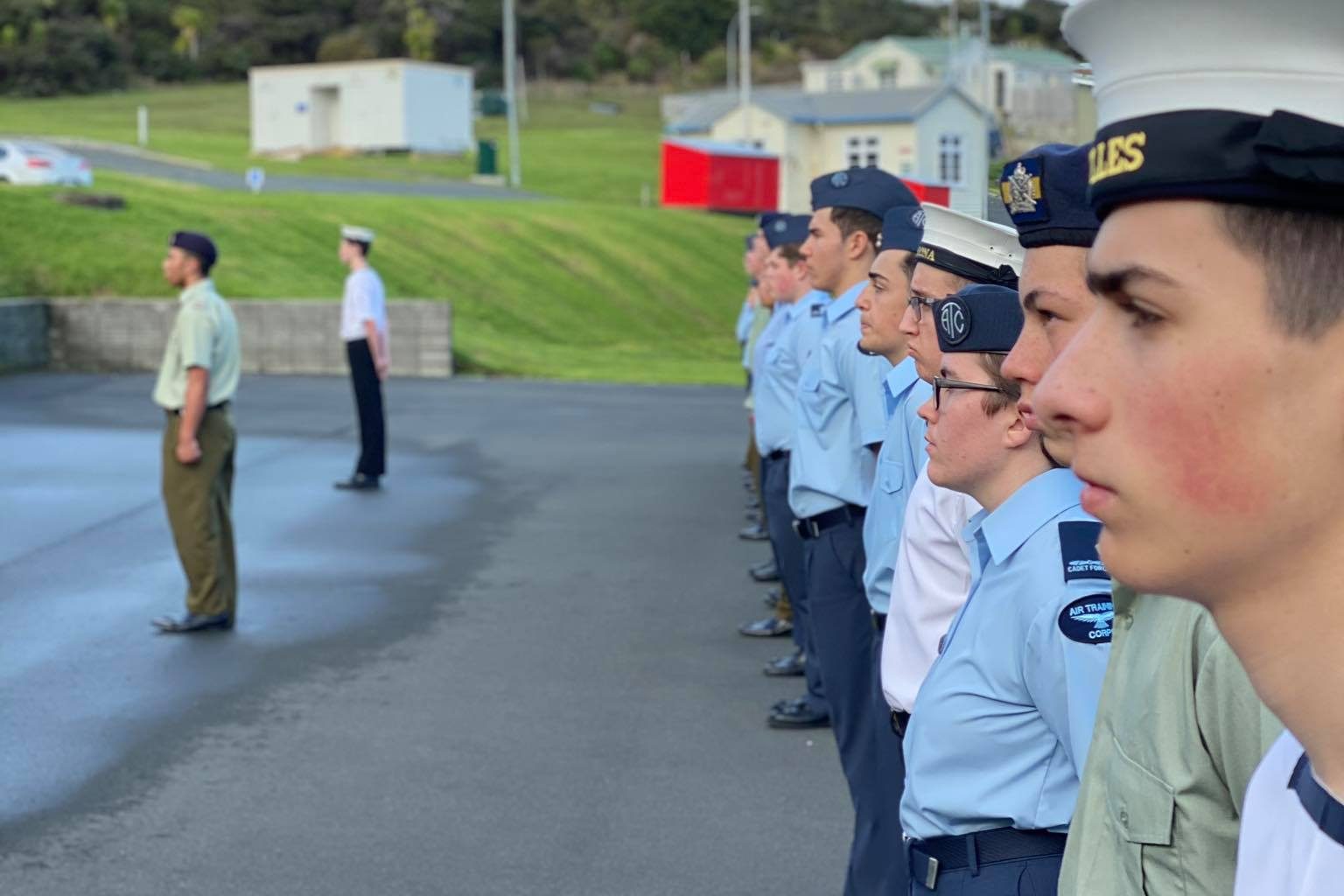
The image shows a group of young individuals in a military formation. They are dressed in light blue shirts and dark trousers, each wearing a cap with the inscription "ACHILLES". Their attire and the caps suggest they are part of a naval cadet program. They are standing at attention on a paved surface, looking off to their left. In the background, a cadet in a khaki uniform faces the group, indicating a possible drill or inspection is underway. The scene is outdoors during daytime, with green hills and a clear sky in the background, along with some buildings and cars, which gives a tranquil and disciplined atmosphere to the setting.
Image courtesy of New Zealand Cadet Forces.

Non-Commissioned Officer Courses

Junior and Senior Non-Commissioned Officer Courses (JNCO and SNCO) are where cadets begin their leadership journey with the JNCO course, focusing on drill instruction, squad handling, and leadership skills. Successful completion allows progression to the SNCO course, where they further develop their ability to lead and instruct, enhancing their leadership and teaching skills.
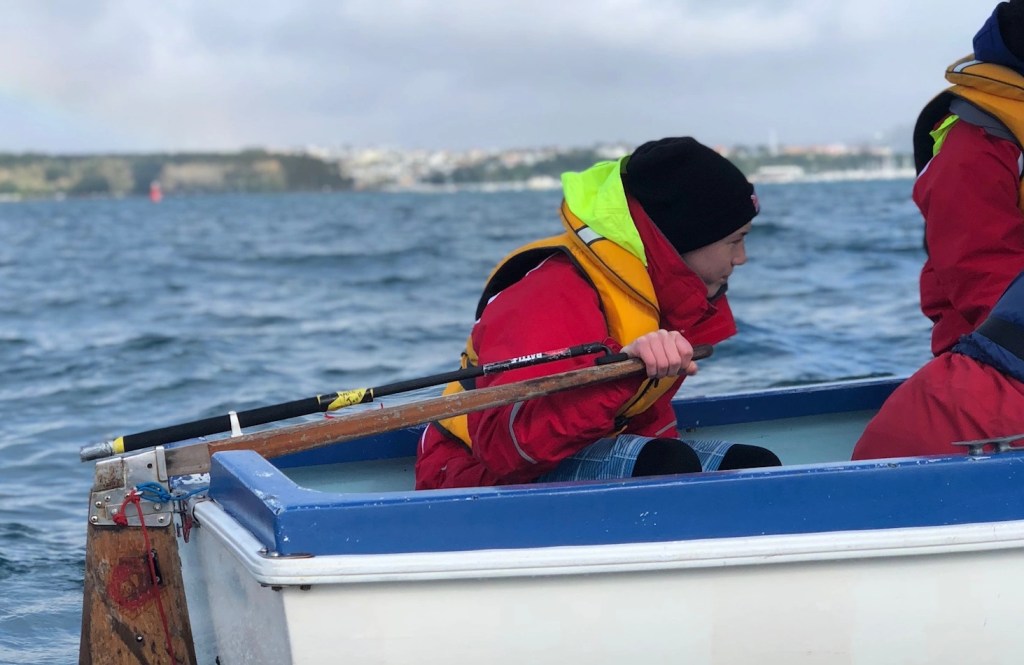
The image captures a close-up moment of a young sailor at the helm of a small boat. The individual is clad in a red life jacket with a high-visibility yellow hood, a black beanie, and is actively engaged in steering, gripping the tiller with focus. The backdrop is a blurred seascape with hints of a distant shoreline, suggesting the photo was taken in a dynamic marine setting. The concentration on the sailor's face and their firm grip on the tiller reflect the attentiveness required to navigate the waters, while the attire indicates cool or potentially adverse weather conditions. The angle of the shot, with the sailor's face partially turned, adds a sense of immediacy and immersion into the sailing experience.
Image courtesy of TS ACHILLES (Auckland City).

Cadet Coxswain Course

Specifically designed for Navy Cadets, this course offers theory and practical instruction in sailing skills, coxswain and crew responsibilities, and emergency procedures, providing a strong maritime foundation.
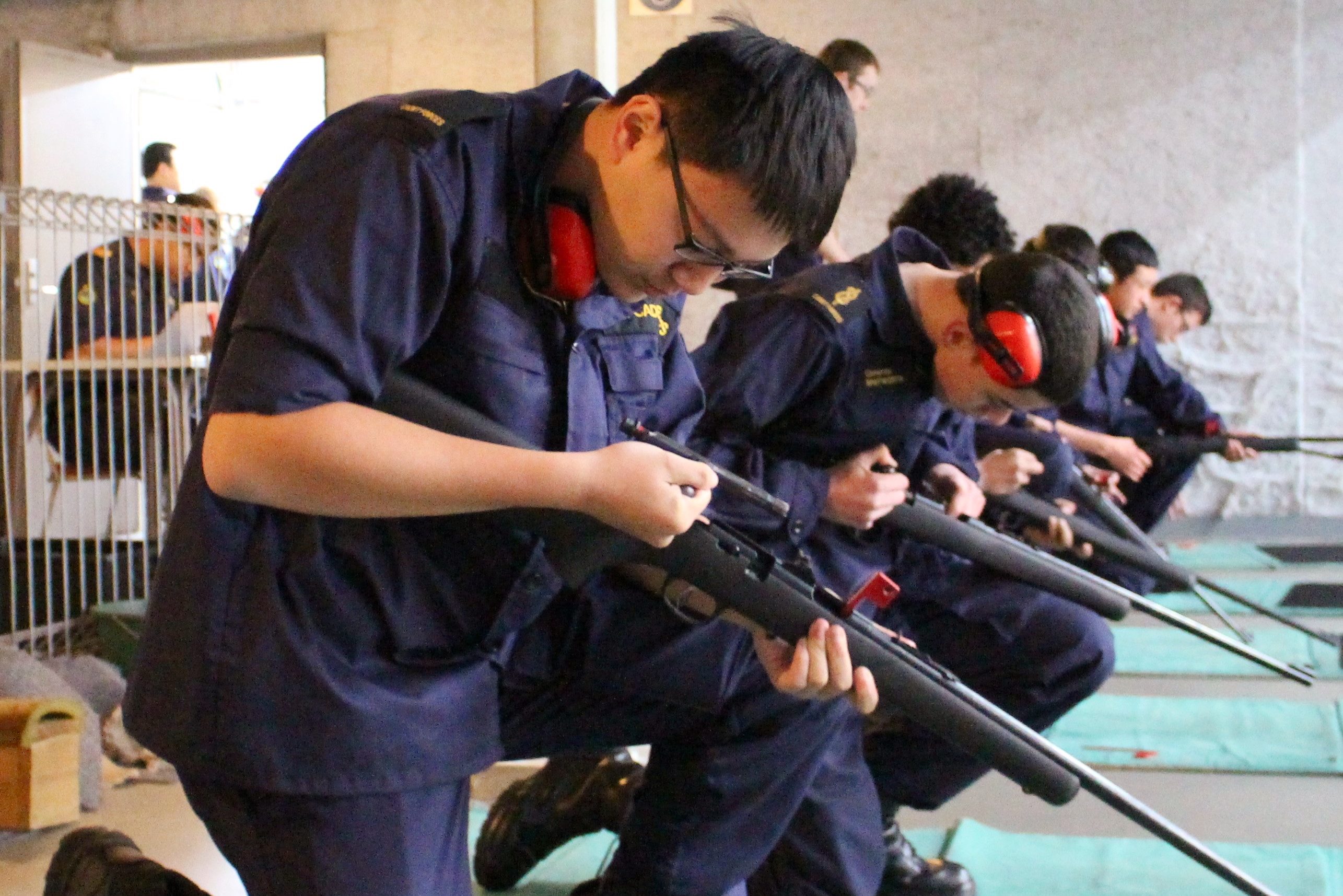
The photograph depicts an indoor target shooting drill. Individuals are arrayed in a row, donned in navy uniforms with protective ear defenders, each meticulously managing a bolt-action rifle. The nearest individual is keenly examining the bolt mechanism of their firearm. The setting is a functional indoor range with bare concrete walls and clear safety notices, underscoring the regimented atmosphere. The participants demonstrate focus and precision, indicative of a cadet training regimen.
Image courtesy of TS ACHILLES (Auckland City).

NZCF Shooting Coaches Course

This course equips Senior NCOs with the skills to coach firers on the .22 Marlin rifle, focusing on marksmanship principles. Participants qualify as safety supervisors and learn how to improve cadet marksmanship.
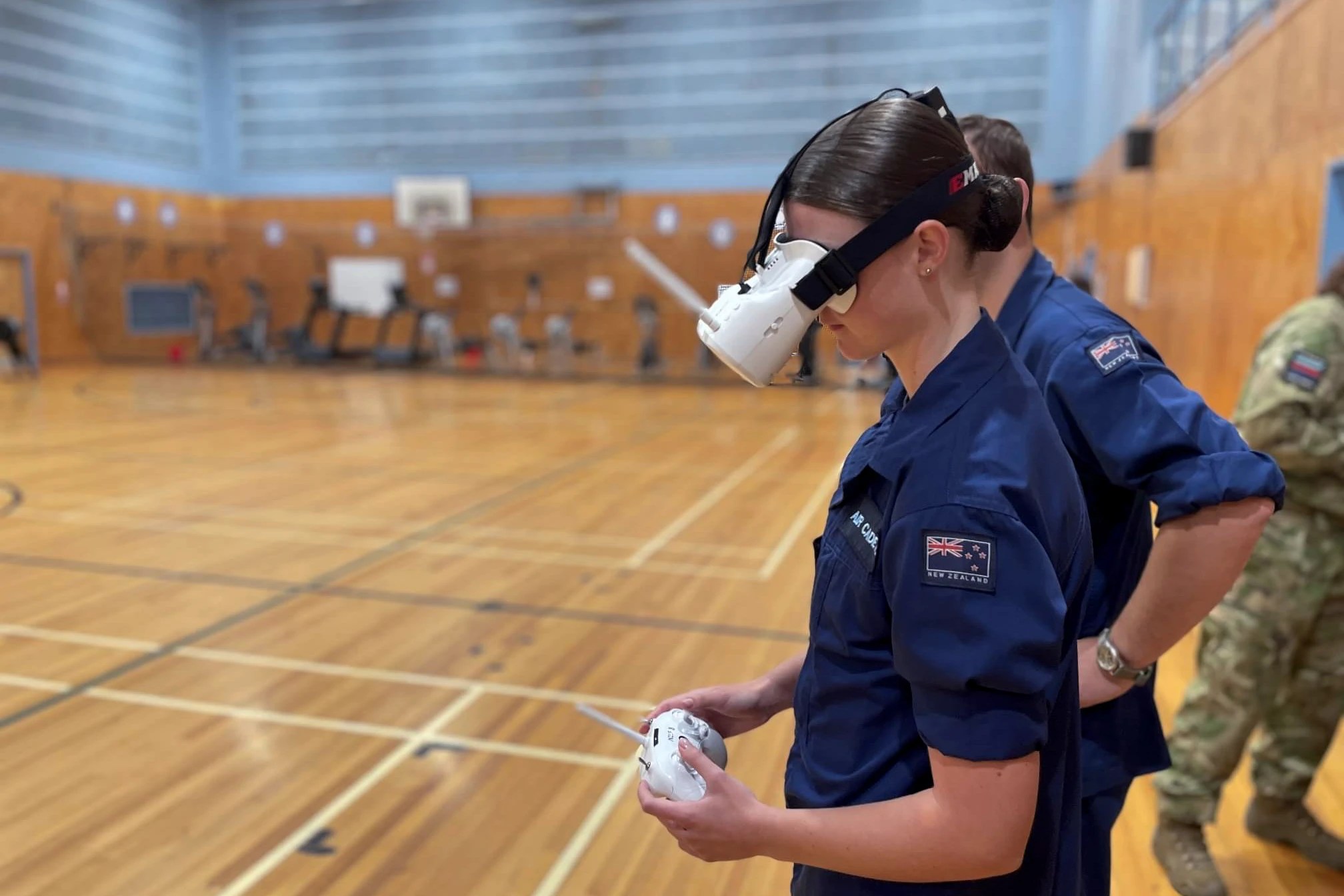
In this image, we see a young individual wearing a dark blue uniform with patches indicating "New Zealand" on the right sleeve. The person is focused on operating a white drone controller with both hands. They are wearing a white virtual reality headset that covers their eyes and is secured around their head with a black strap, which suggests they are immersed in a drone simulation experience. The backdrop is a blurred indoor basketball court, indicating an indoor setting for the NZCF Drone Operator Course. On the right, another individual in a similar uniform is partially visible, and there appears to be some activity in the background, although it is out of focus. The environment suggests a practical, hands-on learning scenario.
Image courtesy of New Zealand Cadet Forces.

Drone Operators Course

Available to all cadets who have completed their first year of training, this course covers drone theory, pre-flight preparations, and flying. It teaches cadets the technical skills, rules, and regulations associated with drone operation.
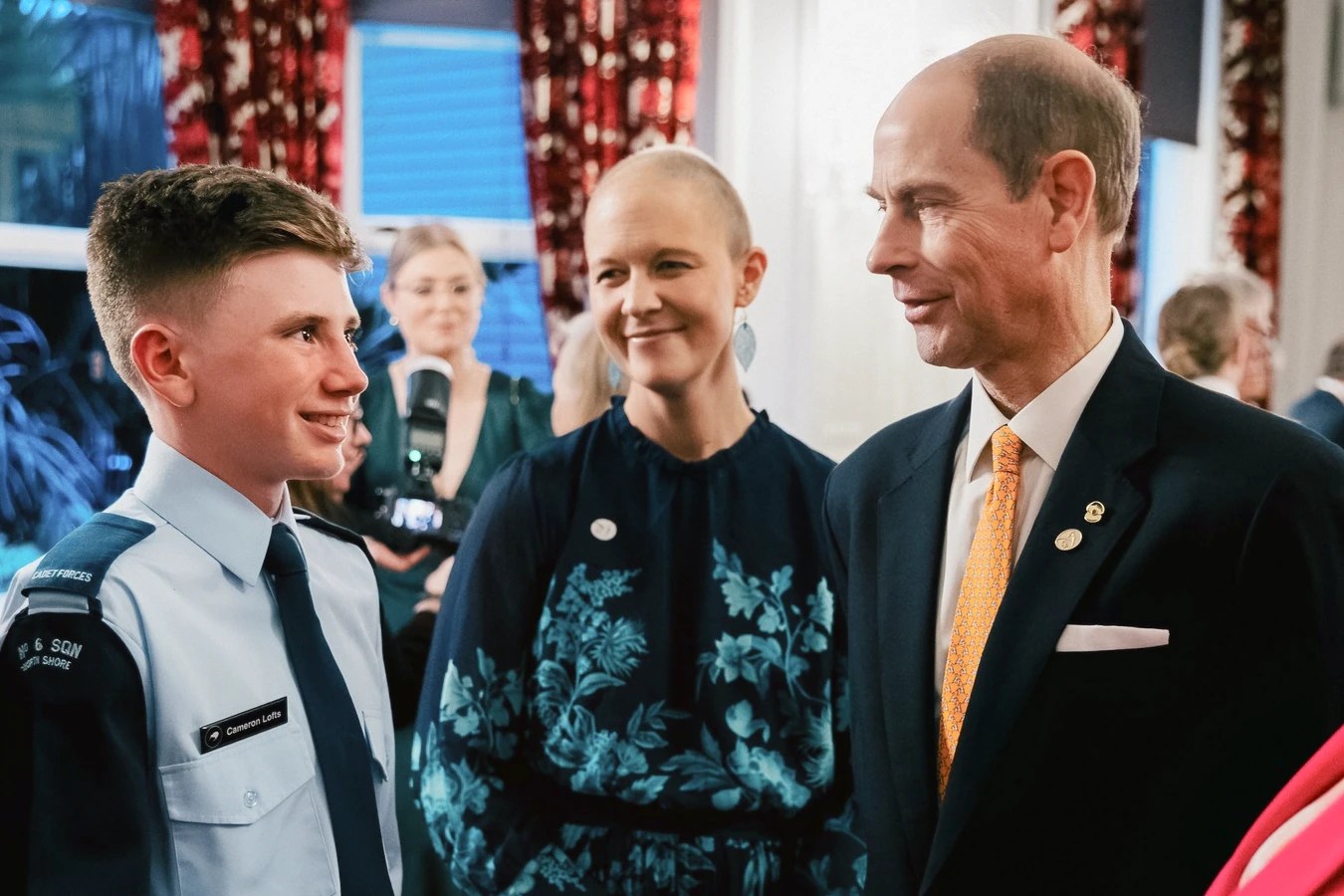
In this edited image, three individuals are engaged in conversation. In the foreground, a young man in a light blue Air Cadet uniform with a nametag reading "Cameron Lowe" is smiling, looking slightly off-camera. He appears engaged and delighted in the interaction. Standing beside him is a woman with a confident, serene expression, and wearing a dark blue dress with a light blue floral pattern. To her side, is the Duke of Edinburgh in a dark suit with a vibrant orange tie adorned with small motifs and a lapel pin is attentively listening to the young cadet. His expression is one of interest and encouragement. In the background, other indistinct figures suggest a formal event. The image evokes a sense of celebration and recognition.
Image courtesy of New Zealand Cadet Forces.

The Duke of Edinburgh’s Hillary Award

Cadets have the opportunity to participate in this prestigious award programme, which encourages them to develop skills, get physically active, give service, and experience adventure, contributing to their personal development and community engagement.
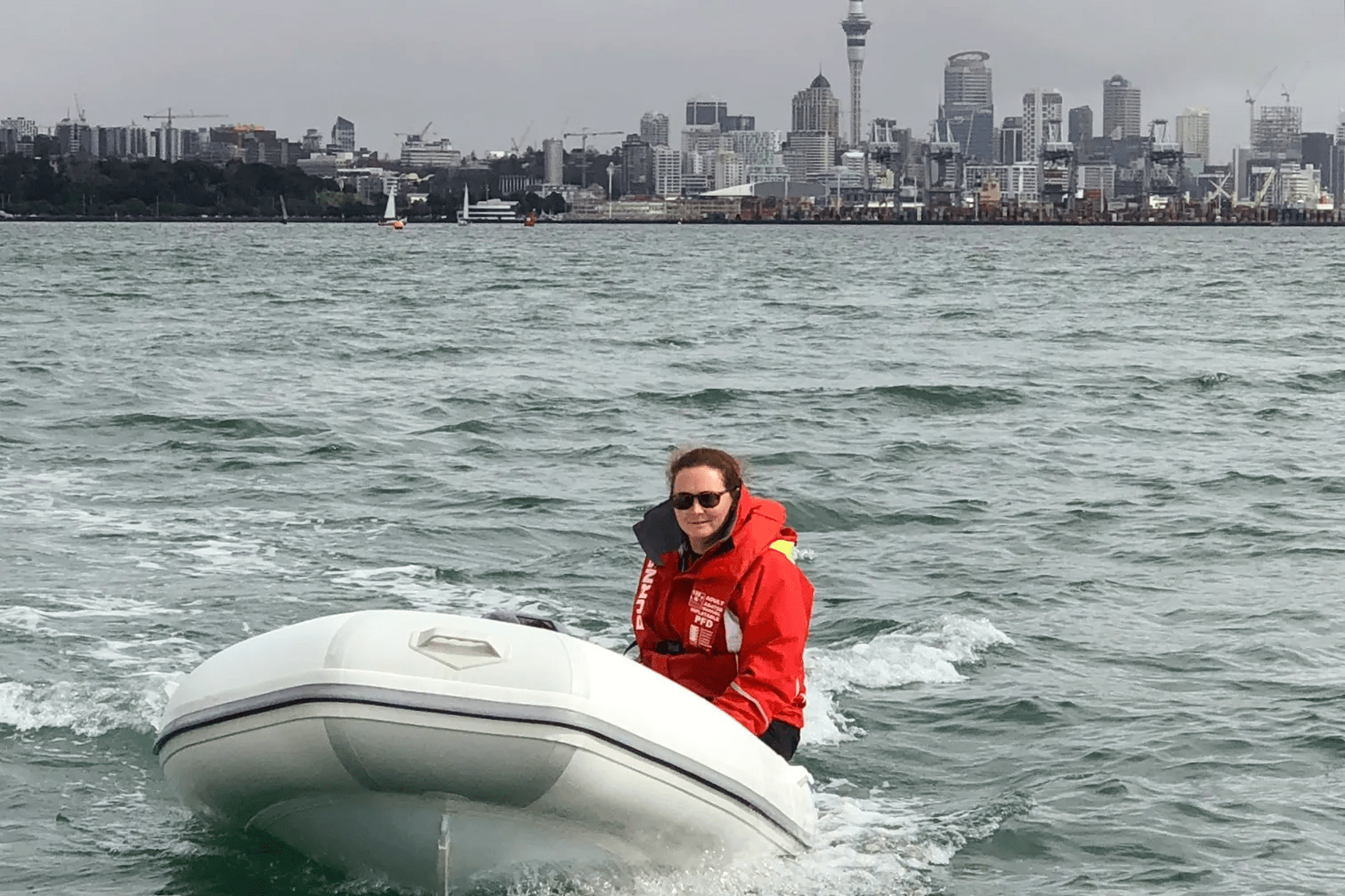
This image shows a person driving a rigid-hulled inflatable boat (RHIB) on choppy water with a city skyline in the background. The individual is dressed in maritime safety gear, including a bright red life jacket and sunglasses, suggesting preparedness for water activities. The RHIB appears to be moving at speed, with water spray around the sides. Behind, the skyline features a variety of buildings and a tall tower, indicative of a large city. The overcast sky suggests it might be a cool day. The person is seated towards the rear of the boat, with their hands presumably on the controls, which are not visible in the photo. The focus on the individual and the RHIB, along with the expansive view of the city, gives the sense of an active moment in a busy, urban waterfront setting.
Image courtesy of TS ACHILLES (Auckland City).

Coastguard Boating Education Courses

A range of courses including Beginning Boating, Day Skipper, Maritime VHF Operator’s Certificate, and Boatmaster are available, providing essential boating knowledge, safety training, and advanced maritime skills. These qualifications are highly valuable for both recreational and potential career pathways in maritime fields.
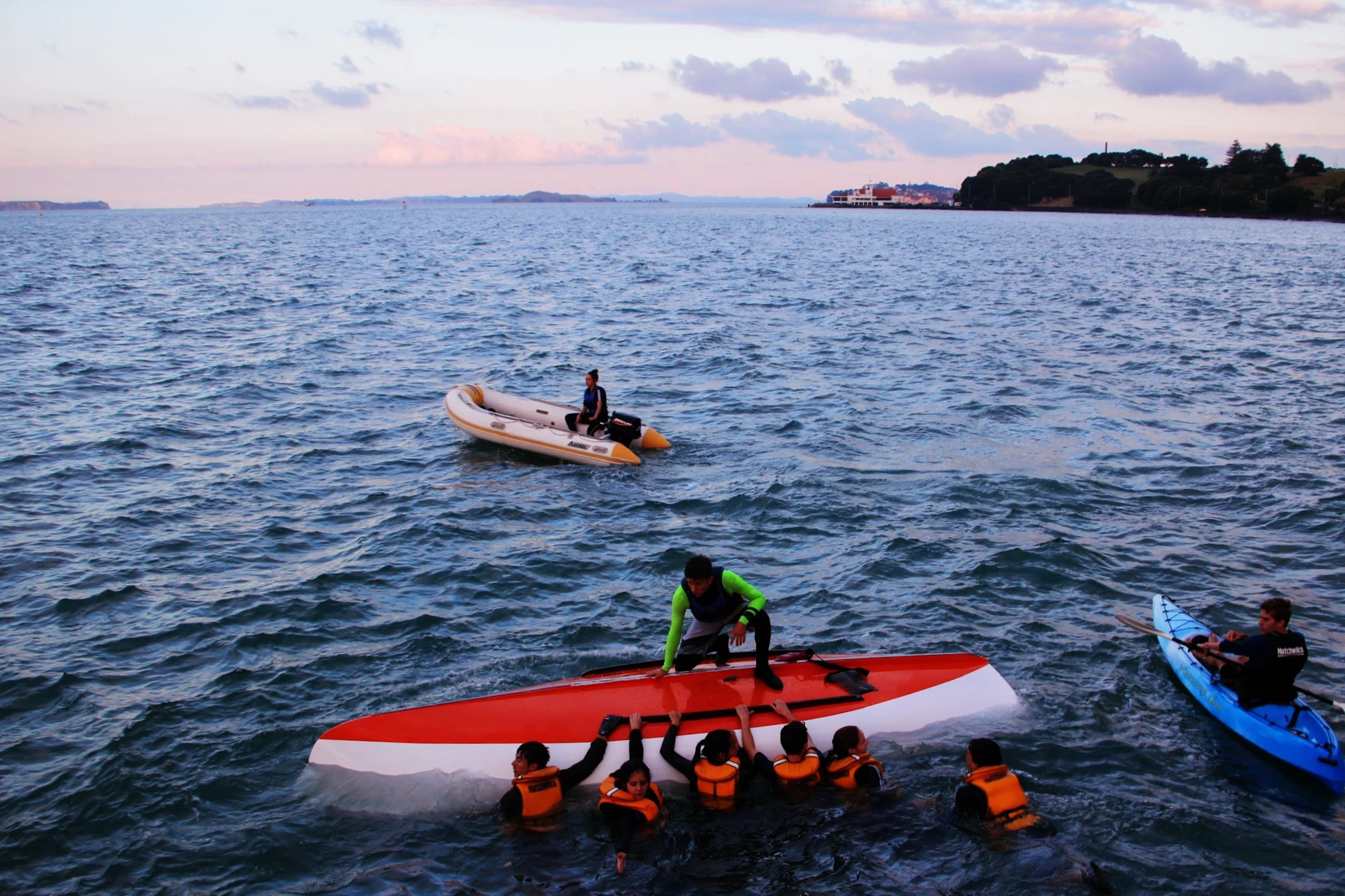
In the image, we see an outdoor water training exercise in progress during twilight. A group of individuals in orange life jackets are in the water around a capsized sailboat, with one person on the hull, actively participating in a capsize recovery drill. To the left, a person on an inflatable dinghy oversees the exercise, while another individual on a kayak is nearby, ready to assist. The water is a deep blue with gentle waves, and the sky above is a mix of soft pink and blue hues, indicative of either dawn or dusk. In the background, there's a hint of land with trees and structures, suggesting this activity is taking place close to shore. The scene is lively with the effort of the training and the calmness of the surrounding nature.
Image courtesy of TS ACHILLES (Auckland City).
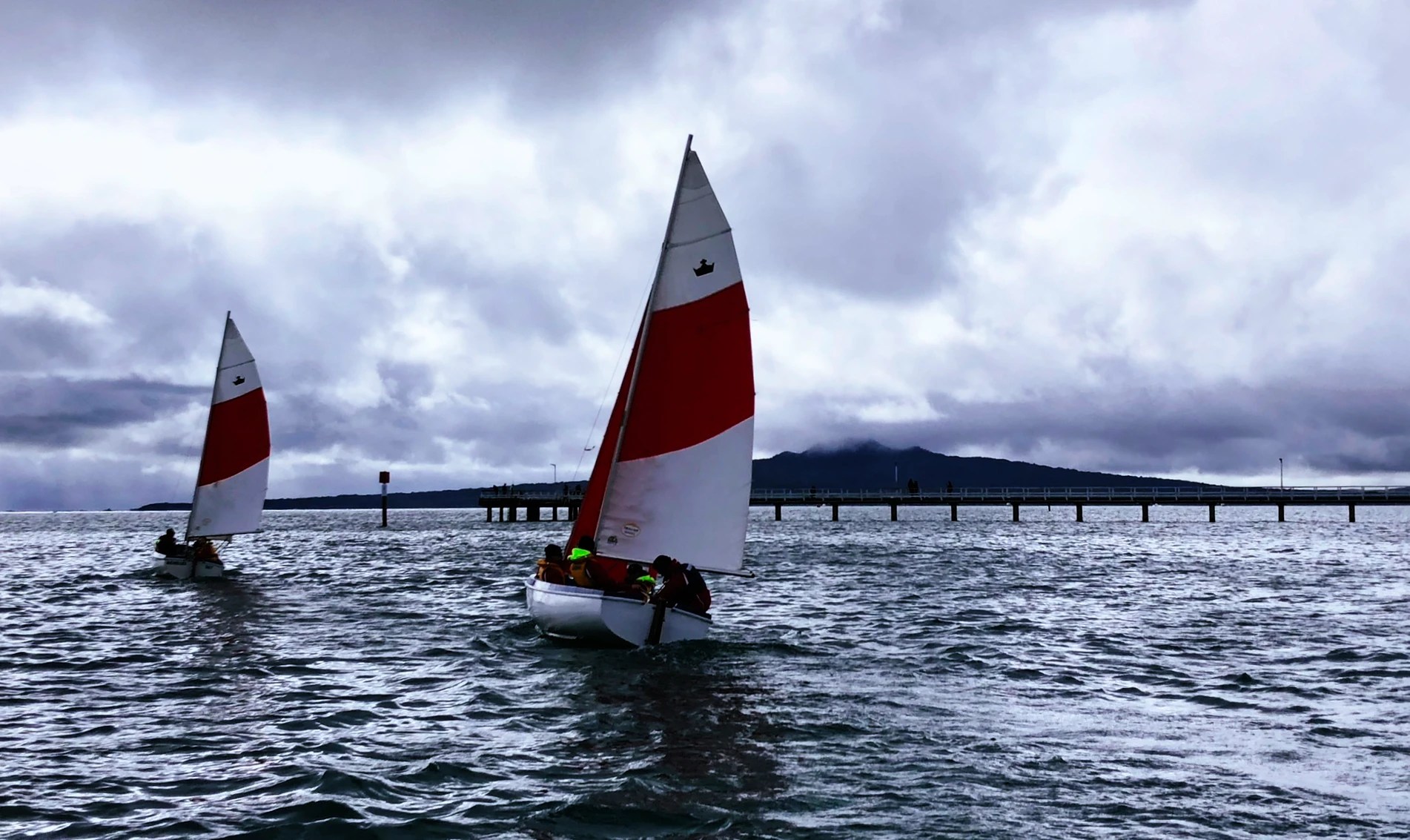
This image features two small sailboats with white and red sails navigating choppy grey-blue waters. The sailors, clad in bright life jackets, are seated closely as they manage their vessels. Overcast skies loom above, filled with heavy clouds that promise inclement weather, yet the scene retains a dynamic sense of adventure and activity. In the background, a long pier extends into the water, leading to a hazy landmass that fades into the distance, creating a sense of depth and scale. The overall impression is of a brisk sailing day where sailors are undeterred by the moody weather, embracing the challenge with enthusiasm.

Start Your Sea Cadets Journey Today